Question
What is the path difference of destructive interference
|
(a) nl |
(b) n(λ + 1) |
(c) |
(d) |
What is the path difference of destructive interference
|
(a) nl |
(b) n(λ + 1) |
(c) |
(d) |
(d) 
Generate a complete, print-ready paper with questions like this in minutes — across 16+ boards, with answer keys.
Two infinite plane parallel sheets separated by a distance d have equal and opposite uniform charge densities σ. Electric field at a point between the sheets is
|
(a) Zero |
(b) |
|
(c) |
(d) Depends upon the location of the point |
Approximate height of ozone layer above the ground is
|
(a) 60 to 70 km |
(b) 59 km to 80 km |
(c) 70 km to 100 km |
(d) 100 km to 200 km |
Two long and parallel wires are at a distance of 0.1 m and a current of 5 A is flowing in each of these wires. The force per unit length due to these wires will be
|
(a) 5 |
(b) 5 |
(c) 2.5 |
(d) 2.5 |
$\oint\limits_\text{S}\text{E.ds}=\frac{\text{q}}{\in_0}$
Which of the following statements is correct?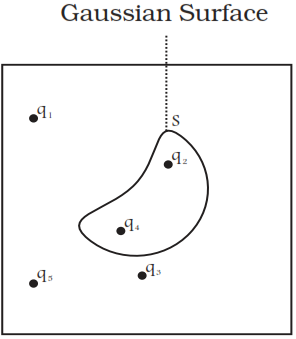
In an X-rays tube, the intensity of the emitted X-rays beam is increased by
| (a) Increasing the filament current | (b) Decreasing the filament current |
|
(c) Increasing the target potential |
(d) Decreasing the target potential |
Assertion : No interference pattern is detected when two coherent sources are infinitely close to each other.
Reason : The fringe width is inversely proportional to the distance between the two slits.
|
(a) If both assertion and reason are true and the reason is the correct explanation of the assertion. |
|
(b) If both assertion and reason are true but reason is not the correct explanation of the assertion. |
|
(c) If assertion is true but reason is false. |
|
(d) If the assertion and reason both are false. |


