Question
What is Trade Discount?
Answer

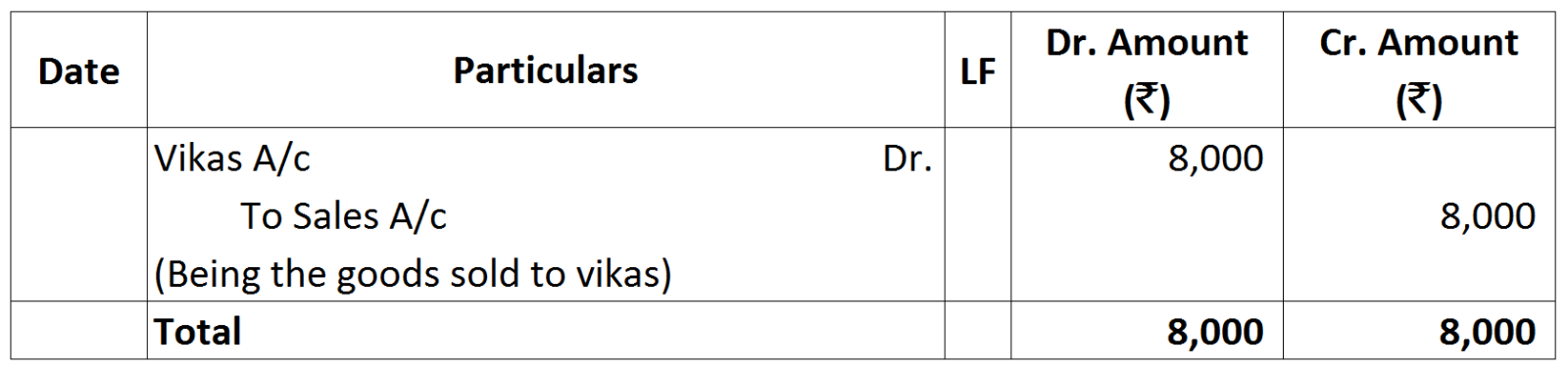
Trade Discount is a discount allowed by the seller on purchase of goods in large quantity. It is normally allowed by the seller to the purchaser who further sells goods to the consumer. It is deducted in the invoice from sale price and is not recorded in the books of account. Sale is recorded at the net value, i.e., sale price less trade discount. For example, Amit sells goods to Vikas of ₹ 10,000 allowing him trade discount of 20%. The invoice will be prepared for net amount ₹ 8,000, i.e., after trade discount. Amit will pass following Journal entry in his books of account:
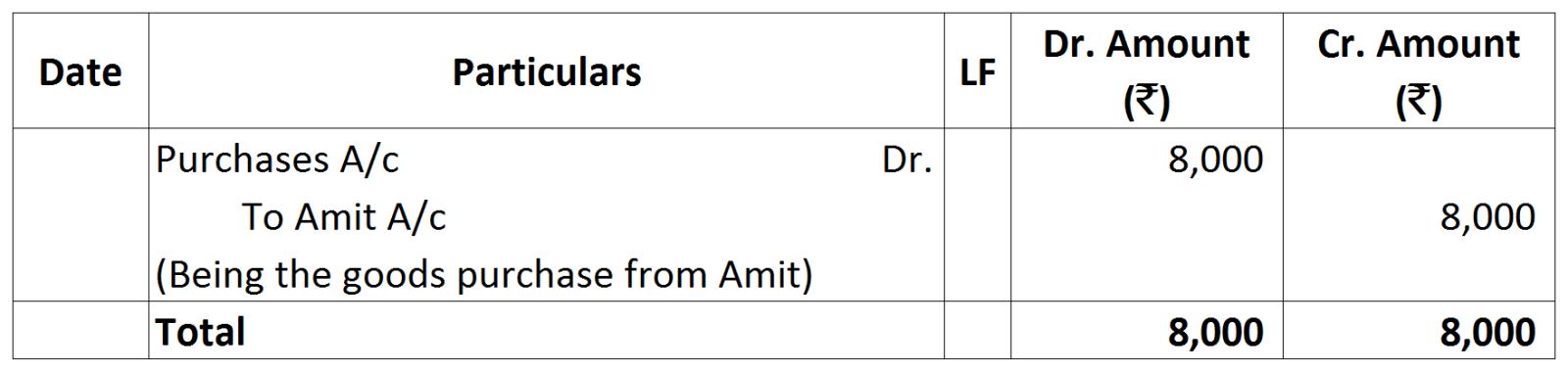
Vikas will pass following journal entry in his books of account:

Need a full question paper?

Generate a complete, print-ready paper with questions like this in minutes — across 16+ boards, with answer keys.
Start Generating Free

Similar questions

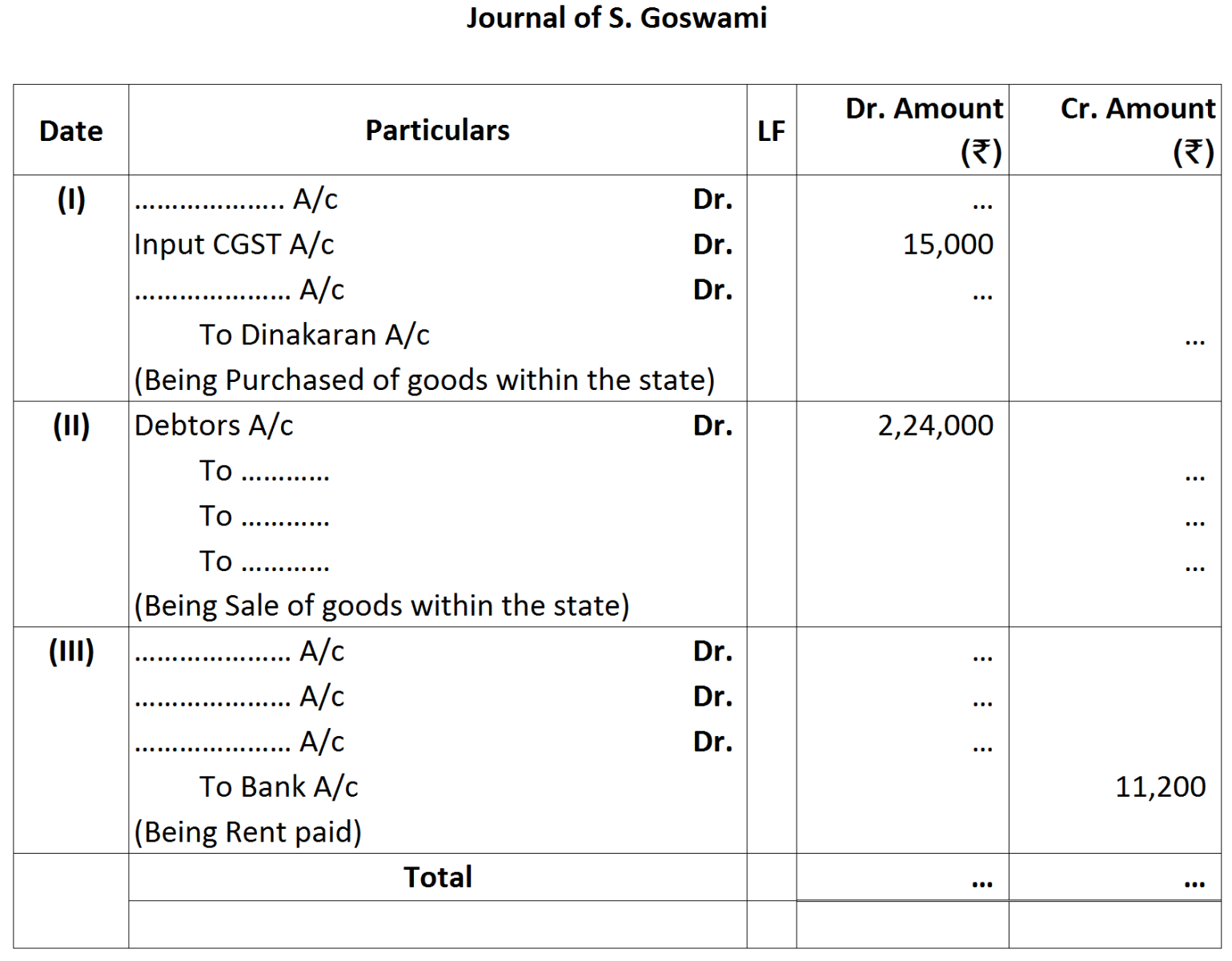
Fill in the missing figures, assuming CGST @ SGST @ 6%:
Asha sold goods worth ₹ 19,000 to Nisha on March 2, 2016. ₹ 4,000 were paid by Nisha immediately and for the balance she accepted a bill of exchange drawn upon her by Asha payable after three months. Asha discounted the bill immediately with her bank @ 10% p.a. On the due date Nisha dishonoured the bill and the bank paid ₹ 30 as noting charges.
On 5th June, Nisha paid ₹ 3,030 (including noting charges) in cash and accepted a new bill at one month for the amount due to Asha together with interest @ 15% p.a. Record the necessary journal entries in the books of Asha and Nisha.
Why expenditure is classified into capital and revenue.
On 31st March, 2019, the balance as per the Bank Statement was ₹ 10,000 debit. On the same date, outstanding cheques amounted to ₹ 30,000 and outstanding deposits amounted to ₹ 50,000. Also, there was a dishonoured cheque from a customer of ₹ 5,000 recorded in the Bank Statement but not in the Cash Book. On the basis of the above information, determine the balance as per the Cash Book.
Following was the position of Harish & Co. as on 1st April, 2017:
Cash in Hand ₹ 10,000; Cash at Bank ₹ 16,800; Furniture ₹ 8,000; Stock ₹ 50,000; Debtors−Ram ₹ 8,000; Shyam ₹ 12,000; Creditors−Anil ₹ 4,000; Sunil ₹ 5,000.
Following transactions took place during April, 2017:
2017
 
April 2
Received a cheque from Ram in full settlement of his account after deducting 5% cash discount.
April 4
Deposited the above cheque into Bank.
April 5
Goods purchased for ₹ 20,000 at 10% trade discount and 5% cash discount. Payment made by cheque.
April 6
Discount allowed to him ₹ 140. Cheque deposited into the bank on the same day.
April 10
Cash paid to Anil after deducting 2% cash discount.
April 15
Old furniture sold for ₹ 800.
April 16
Sold goods to Shiv Parshad of the list price of ₹ 10,000 at a trade discount of 15%.
April 18
Shiv Parshad returned goods of the list price of ₹ 1,000.
April 20
Paid for furniture repairs to Bahadur Singh ₹ 100.
April 25
Received a cheque from Shiv Parshad after deducting 4% cash discount. Cheque was deposited into bank.
April 28
Bank charged ₹ 50 for 'Bank Charges'.
April 30
Received Commission ₹ 200.
Pass Journal entries for the above transactions.
Open 'T' shape account for Machinery and write the following on the proper side:
    (₹)
i. Machinery purchased for 5,00,000
ii. Machinery sold 1,20,000
iii. Machinery discarded 50,000
iv. New Machinery purchased 2,00,000
v. Machinery destroyed 40,000
What are Accounting Standards? Name any two Accounting Standards.
What are Adjustment Entries?
Amrit prepared his Trial Balance on 31st March, 2019, which did not match. What step should he take to proceed further?
Journalise the following transactions in the books of Kanishk Traders:
i.
Sold goods costing ₹ 1,20,000 to Charu at a profit of $33\frac{1}{3}\%$ on cost less 15% Trade Discount.
ii.
Sold goods costing ₹ 80,000 to Arun against cheque at a profit of 25% on cost less 15% Trade Discount.
iii.
Paid by cheque ₹ 8,400 as insurance premium for a period of 12 months starting 1st August 2016. Financial year closes on 31st March every year.