Question
What is unified field theory?

Answer

The theory with which scientists try to unify all forces is called unified field theory.

Need a full question paper?

Generate a complete, print-ready paper with questions like this in minutes — across 16+ boards, with answer keys.
Start Generating Free

Similar questions

A rod of rest length L moves at a relativistic speed. $\text{L}=\frac{\text{L}}{\curlyvee}.$ Let Its length:
  1. Must be equal to L.
  2. May be equal to L.
  3. May be more than L' but less than L.
  4. May be more than L.
A current $\text{i}_1=\text{i}_0\sin\omega\text{t}$ passes through a resistor of resistance R. How much thermal energy is produced in one time period? A current $\text{i}_2=-\text{i}_0\sin\omega\text{t}$ passes through the resistor. How much thermal energy is produced in one time period? If $i_1$, and $i_2$ both pass through the resistor simultaneously, how much thermal energy is produced? Is the principle of superposition obeyed in this case?
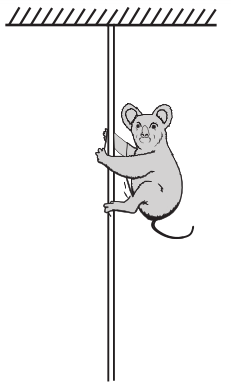
A monkey of mass $40kg$ climbs on a rope $($Fig.$)$ which can stand a maximum tension of $600 N$. In which of the following cases will the rope break: the monkey,

$($Ignore the mass of the rope$)$.
Write the value of restoring force in a simple pendulum, when the angle of displacement is small.
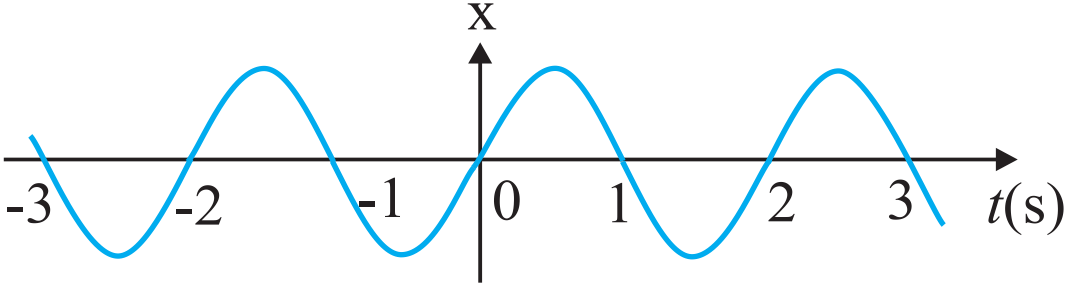
Fig. depicts four x-t plots for linear motion of a particle. Which of the plots represent periodic motion? What is the period of motion (in case of periodic motion)?
Two alternating currents are given by, $\text{i}_\text{i}=\text{i}_0\sin\omega\text{t}$ and $\text{i}_\text{i}=\text{i}_0\sin\Big(\omega\text{t}+\frac{\pi}{3}\Big)$ Will the rms values of the currents be equal or different?
The gravitational force between a hollow spherical shell (of radius R and uniform density) and a point mass is F. Show the nature of F vs r graph where r is the distance of the point from the centre of the hollow spherical shell of uniform density.
Why is spring made of steel and not of copper?
A stone thrown vertically upward from the earth's surface, when the stone
(a) Is moving on its upward path.
(b) If it is moving in downward motion, then in which direction are its velocity and acceleration acting?
Name two pairs of physical quantities whose dimensions are same.