Question
What problems are created by the stereotypes?

Answer

Stereotypes create the following problems:
  1. They stop us from looking at each person as a unique person.
  2. They prefer their special qualities and not of others.
  3. They fit large number of people in one pattern or type.
  4. They prevent us from doing certain things.

Need a full question paper?

Generate a complete, print-ready paper with questions like this in minutes — across 16+ boards, with answer keys.

Start Generating Free

Similar questions

List the names of rivers mentioned in Vedas.
Match the columns:
S.No
Keywords
S.No
Used For
1.
Sukta
(a)
Stone boulder.
2.
Chariots
(b)
Sacrifice.
3.
Yajna
(c)
Well-said.
4.
Dasa
(d)
Used in battles.
5.
Megalith
(e)
Slave.
Differentiate between the Summer and Winter Solstice.
Who lived in the villages in the subcontinent before and during the age of the Buddha?
Explain the following:
  1. Revolution of the Earth.
  2. Leap year.
Give an account of the wildlife.
Name the language which was not used in the Ancient Period.
Read the following account (terrace farming in Nagaland) and answer the questions that follow it:
Terrace Farming in Nagaland:
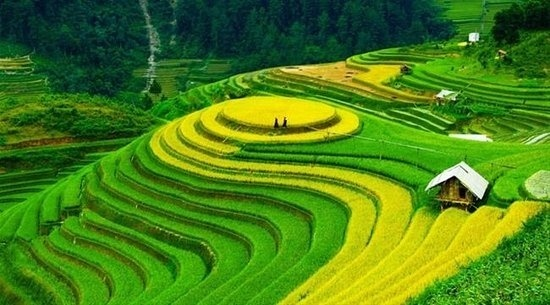
This is a village called Chizami which is in Phek district in Nagaland. The people of this village belong to the Chakhesang community. They do ‘terrace’ cultivation.

This means that the land on a hill slope is made into flat plots and carved out in steps. The sides of each plot are raised in order to retain water. This allows water to stand in the field, which is best for rice cultivation.
The people of Chizami have their own individual fields. But, they also work collectively in each other’s fields. They form groups of six or eight and take an entire mountainside to clean the weeds on it.
Each group eats together once their work for the day is over. This goes on for several days until the work is completed.
  1. Which village is referred to in the picture above? Where is it located?
  2. Which community do the villagers of this village belong to?
  3. What type of farming do they practise?
  4. For what is this practice the best?
  5. Why do the people of Chizami work collectively?
How do we know who was buried?
Can we compare historians to detectives? Give reasons for your answers.