The next item on the agenda for the Gram Sabha is the finalisation of list of people below the poverty line (BPL) which had to be approved by the Gram Sabha. As soon as the list is read out people begin to whisper. “Natwar has just bought a colour T.V. and his son has sent him a new motorcycle. How can he be below the poverty line?” Soorajmal mutters to the person sitting next to him. Saroj says to Sukhi Bai “How did Birju’s name get on to the list? He has so much land. This list should have only poor people. And Om Prakctsh is a landless labourer who can barely make ends meet, yet his name is not on the list.” “You know that both Natwar and Birju are friends of Amirchand. Who can counter Amirchand’s power?’ Sukhi Bai says, “Amirchand was the earlier Zamindar (landowner) of the village and still has control over a lot of land. But we should get Om Prakash’s name put in.”
The Sarpanch (Panchayat President) notices people whispering and asks if anyone has anything to say. Saroj tries to provoke Soorajmal to ask about Natwar arid Birju. But he keeps quiet. Amirchand is sitting in the Gram Sabha keeping an eye on everyone. Then Saroj gets up and says that Om Prakash’s name should be in the BPL list. Others agree that he and his family are very poor.
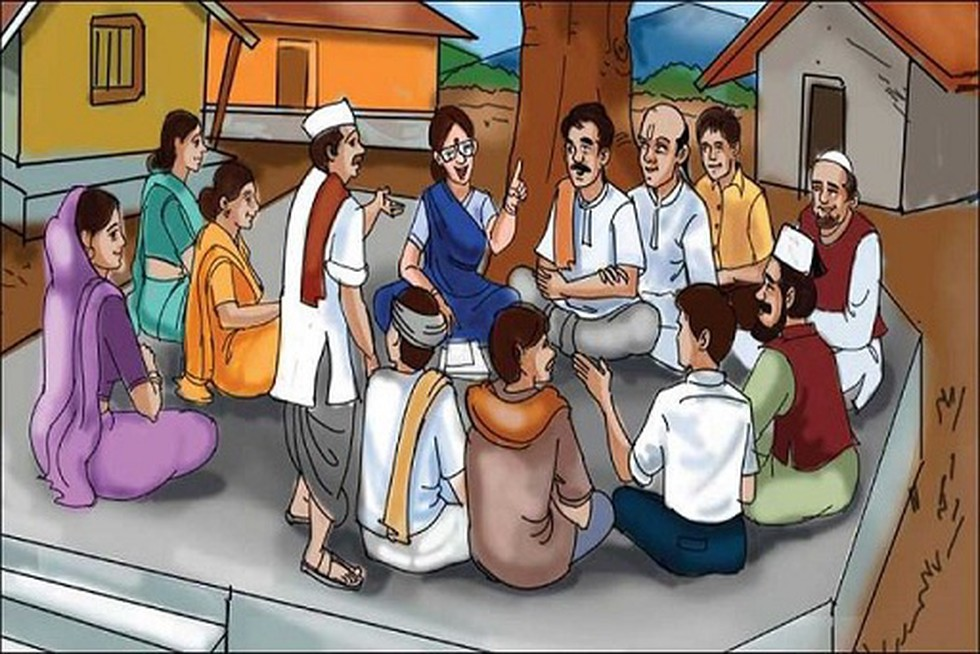
The Sarpanch asks how his name had been missed out. The teacher who did the survey of BPL families says, “Om Prakash’s house was locked when I went there. He may have gone somewhere to look for work.” The Sarpanch gives instructions that Om Prakash’s family income be looked at and if it is less than what has been decided by the government, his name should be included in the list.
- What is being discussed in this meeting of the Gram Sabha?
- Who are Natwar and Birju?
- Who is Om Prakash?
- Who is Amirchand? What did he do in the past?
- Why was Om Prakash’s name missed from the BPL list according to the teacher who surveyed the BPL families?