Question
When a compass needle be placed at magnetic north pole, how would it behave? If a dip needle be placed at the place, how would it behave?

Answer

Compass needle stays in horizontal north-south direction. At poles horizontal component H = 0; therefore there will be no effect of earth’s field on magnetic north pole and it can stay in any direction; on the other hand a dip needle points along the resultant magnetic field and at poles the resultant field is vertical; hence the needle becomes vertical.

Need a full question paper?

Generate a complete, print-ready paper with questions like this in minutes — across 16+ boards, with answer keys.
Start Generating Free

Similar questions

An equiconvex lens of focal length $'f\ '$ is cut into two identical plane convex lenses. How will the power of each part be related to the focal length of the original lens? A double convex lens of $+5D$ is made of glass of refractive index $1.55$ with both faces of equal radii of curvature. Find the value of its radius of curvature.

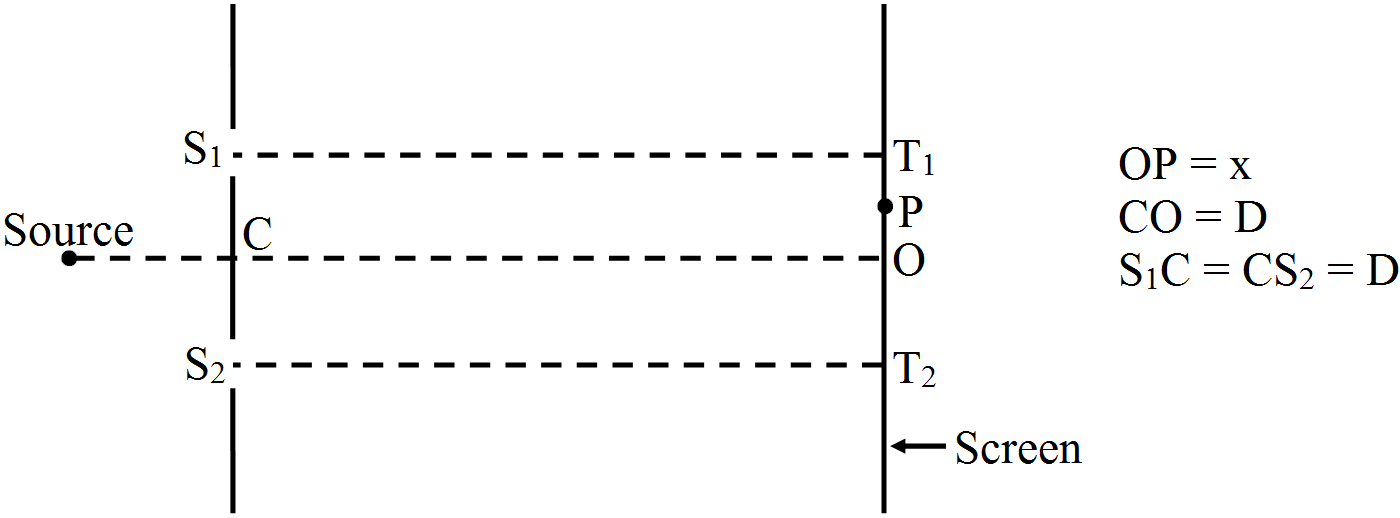
Consider a two slit interference arrangements such that the distance of the screen from the slits is half the distance between the slits.

Obtain the value of D in terms of $\lambda$ such that the first minima on the screen fall at a distance D from the centre O.
Derive the equation for the torque acting on current-carrying coil place in uniform magnetic ficld $\overrightarrow{ B }$.
If a piece of paper is placed at the position of a virtual image of a strong light source, will the paper burn after sufficient time? What happens if the image is real? What happens if the image is real but the source is virtual?
What potential difference should be applied across an X-ray tube to get X-ray of wavelength not less than 0.10nm? What is the maximum energy of a photon of this X-ray in joule?
Draw the typical input and output characteristics of an $\text{n - p - n}$ transistor in $CE$ configuration. Show how these characteristics can be used to determine
$(a)$ the input resistance $(r_i),$ and
$(b)$ current amplification factor $(\beta).$
Consider the situation of the previous problem. Find the average electric field energy stored in the capacitor and the average magnetic field energy stored in the coil.
(i) What is meant by electric power? Prove that $P=\frac{V^2}{R}$ or $P=I^2 R$. Define one-watt electric power.(ii) Define electric energy. Prove that $P = I ^2 R \Delta t$
A mosquito is sitting on an $L.P.$ record disc rotating on a turn table at $33\frac{1}{3}$ revolutions per minute. The distance of the mosquito from the centre of the turn table is $10\ cm$. Show that the friction coefficient between the record and the mosquito is greater than $\frac{\pi^2}{81}.$ Take $g =10 m/s^2.$
Define the term “cut off frequency” in photoelectric emission. The threshold frequency of a metal is $f.$ When the light of frequency $2f$ is incident on the metal plate, the maximum velocity of photo$-$electrons is $v_1.$ When the frequency of the incident radiation is increased to $5f,$ the maximum velocity of photo$-$electrons is $v_2.$ Find the ratio $v_1 : v_2.$