MCQ
When a current in a circular loop is equivalently replaced by a magnetic dipole:
- AThe pole strength m of each pole is fixed.
- BThe distance d between the poles is fixed.
- CThe product md is fixed.
- DNone of the above.
Explanation:
When we replace a circular current-carrying loop with a magnetic dipole to resemble field lines of the circular loop, the pole strength m and the distance between the poles are not fixed.
But the magnetic dipole moment of both systems is always fixed. It is the product of the magnetic moment and the distance between the poles. In other words, md is fixed.
A current loop of area A and current I can be replaced with a magnetic dipole of dipole moment md.
i.e. md = IA
Generate a complete, print-ready paper with questions like this in minutes — across 16+ boards, with answer keys.
The minimum wavelength of the X-rays produced by electrons accelerated through a potential difference of V volts is directly proportional to
(a) 
|
(b) 
|
(c) 1/
|
(d) 1/V |
Which of the following is constructed on the principle of electromagnetic induction
|
(a) Galvanometer |
(b) Electric motor |
(c) Generator |
(d) Voltmeter |
A point source of light is placed at a distance, of 2f from a converging lens of focal length f. The intensity on the other side of the lens is maximum at a distance:
What is the equivalent resistance between the points A and B of the network

|
(a) |
(b) 8 W |
(c) 6 W |
(d) |
A glass lens is placed in a medium in which it is found to behave like a glass plate. Refractive index of the medium will be
|
(a) Greater than the refractive index of glass |
|
(b) Smaller than the refractive index of glass |
|
(c) Equal to refractive index of glass |
|
(d) No case will be possible from above |
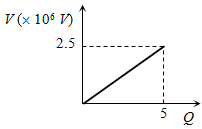
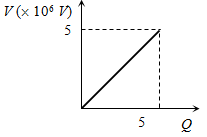
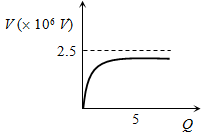
A condenser of 2mF capacitance is charged steadily from 0 to 5 Coulomb. Which of the following graphs correctly represents the variation of potential difference across its plates with respect to the charge on the condenser
|
(a)
|
(a)
|
(c)
|
(d)
|
Which of the following is accompanied by the characteristic X-ray emission
| (a) α - particle emission | (b) Electron emission |
| (c) Positron emission | (d) K–electron capture |
Which of the following statement is correct
|
(a) Both Peltier and Joule effects are reversible |
|
(b) Both Peltier and Joule effects are irreversible |
|
(c) Joule effect is reversible, whereas Peltier effect is irreversible |
|
(d) Joule effect is irreversible, whereas Peltier effect is reversible |