Question
When a ferromagnetic material goes through a hysteresis loop, the magnetic susceptibility:

Answer

  1. May be zero.
  2. May be infinity.
  3. May be negative.
Explanation:
When a ferromagnetic material goes through a Hysteresis loop, the Magnetic susceptibility may be zero, may be infinity or may be negative.

Need a full question paper?

Generate a complete, print-ready paper with questions like this in minutes — across 16+ boards, with answer keys.
Start Generating Free

Similar questions

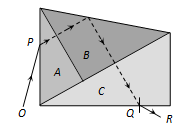
Three glass prisms $A, B$ and $C$ of same refractive index are placed in contact with each other as shown in figure, with no air gap between the prisms. Monochromatic ray of light $OP$ passes through the prism assembly and emerges as $QR.$ The conditions of minimum deviation is satisfied in the prisms
Total electric flux coming out of a unit positive charge put in air is
If the number of turns in a moving coil galvanometer is increased its sensitivity :
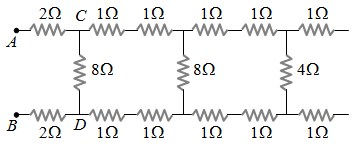
In the figure shown, the total resistance between $A$ and $B$ is
 Pick out the correct increasing order of energy of electromagnetic waves from the following:
A moving coil galvanometer has $N$ number of turns in a coil of effective area $A ,$ it carries a current $I .$ The magnetic field $B$ is radial. The torque acting on the coil is
Light waves travel in vacuum along the X-axis. Which of the following may represent the wavefronts?
The half-life of radon is 3.8 days. Three forth of a radon sample decay in(a) 5.02 days(b) 15.2 days(c) 7.6 days(d) 11.4 days
       
Assertion  :   Magnetism is relativistic.
Reason      : When we move along with the charge so that there is no motion relative to us, we find no magnetic field associated with the charge.(a) If both assertion and reason are true and the reason is the correct explanation of the assertion.(b) If both assertion and reason are true but reason is not the correct explanation of the assertion.(c) If assertion is true but reason is false.(d) If the assertion and reason both are false.


In Young's double slit experiment, the intensity on the screen at a point where path difference is $l$ is $K.$ What will be the intensity at the point where path difference is $\frac{\lambda}{4}$