MCQ
When a particle moves in a uniform circular motion. It has
  • A
    Radial velocity and radial acceleration
  • Tangential velocity and radial acceleration
  • C
    Tangential velocity and tangential acceleration
  • D
    Radial velocity and tangential acceleration

Answer

Correct option: B.
Tangential velocity and radial acceleration
b
An object moving in a circle is accelerating. Accelerating objects are objects which are changing their velocity - either the speed (i.e., magnitude of the velocity vector) or the direction. An object undergoing uniform circular motion is moving with a constant speed.

Need a full question paper?

Generate a complete, print-ready paper with questions like this in minutes — across 16+ boards, with answer keys.
Start Generating Free

Similar questions

If the displacement of a particle varies with time as $\sqrt{x}=t+7$, then
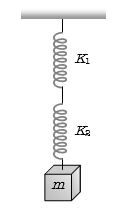
The frequency of oscillation of the springs shown in the figure will be
Consider the following two equations:
$A. \overrightarrow{\text{R}}=\frac{1}{\text{M}}\sum\limits_{\text{i}}\text{m}_\text{i}\overrightarrow{\text{r}}_\text{i}$
$B. \overrightarrow{\text{a}}_\text{cm}=\frac{\overrightarrow{\text{F}}}{\text{M}}$
In a noninertial frame 
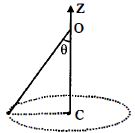
A conical pendulum of length $1\,m$ makes an angle $\theta \, = 45^o$ w.r.t. $Z-$ axis and moves in a circle in the $XY$ plane.The radius of the circle is $0.4\, m$ and its centre is vertically below $O$. The speed of the pendulum, in its circular path, will be ..... $m/s$ (Take $g\, = 10\, ms^{-2}$)
A cubical block of mass M and edge a slides down a rough inclined plane of inclination $\theta$ with a uniform velocity. The torque of the normal force on the block about its centre has a magnitude:
In steel, the Young's modulus and the strain at the breaking point are $2 \times {10^{11}}\,N{m^{ - 2}}$ and $0.15$ respectively. The stress at the breaking point for steel is therefore
If two liquids of same volume but different densities ${\rho _1}$ and ${\rho _2}$ are mixed, then density of mixture is given by
A block of mass $m$ slides down on a wedge of mass $M$ as shown in figure. Let $\vec a_1$ be the acceleration of the wedge and $\vec a_2$  the acceleration of block w.r.t. ground. $N_1$ is the normal reaction between block and wedge and $N_2$ the normal reaction between wedge and ground. Friction is absent everywhere. Select the incorrect alternative
Two projectiles $A$ and $B$ are thrown with the same speed but angles are $40^{\circ}$ and $50^{\circ}$ with the horizontal. Then
Entropy of a thermodynamic system does not change when this system is used for