MCQ
When joint becomes inflamed and painful, condition is called
- ARheumatism
- BSprain
- ✓Gouty arthritis
- DOsteoarthritis
Generate a complete, print-ready paper with questions like this in minutes — across 16+ boards, with answer keys.
|
Column $I$ $(Function)$ |
Column $II$ $(Part of Excretory System)$ |
|
$(a)$ Ultrafiltration |
$(i)$ Henle’s loop |
|
$(b)$ Concentration of urine |
$(ii)$ Ureter |
|
$(c)$ Transport of urine |
$(iii)$ Urinary bladder |
|
$(d)$Storage of urine |
$(iv)$ Malpighian corpuscle |
|
|
$(v)$Proximal convoluted tubule |
Components:
$(i)$ Cristae of mitochondria
$(ii)$ Inner membrane of mitochondria
$(iii)$ Cytoplasm
$(iv)$ Smooth endoplasmic reticulum
$(v)$ Rough endoplasmic reticulum
$(vi)$ Mitochondrial matrix
$(vii)$ Cell vacuole
$(viii)$ NucleusThe correct components are: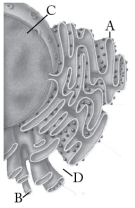
$X$ - $Y$
$(i)$ Neurospora, which is used in biochemical and genetic work is a member of this class.
$(ii)$ They are mostly multicellular, e.g., Yeast, or rarely unicellular, e.g., Penicillium.
$(iii)$ They are saprophytic, decomposers, parasitic or coprophilous.
$(iv)$ Some examples are Aspergillus, Claviceps and Neurospora.