MCQ
When $KMnO_4$ solution is added to hot oxalic acid solution, the decolourisation is slow in the beginning but becomes instantaneous after some time. This is because
  • $Mn^{2+}$ acts as auto catalyst
  • B
    $CO_2$ is formed
  • C
    Reaction is exothermic
  • D
    $MnO_4^-$ catalyses the reaction.

Answer

Correct option: A.
$Mn^{2+}$ acts as auto catalyst
a
Here, $KMnO _4$ is a reactant in the reaction which forms $Mn ^{2+}$ which acts as an auto-catalyst. The reaction is slow initially because $MnO _4{ }^{-}$is getting converted to $Mn ^{2+}$ but once $Mn ^{2+}$ forms, the reaction becomes faster due to the catalytic action.

Need a full question paper?

Generate a complete, print-ready paper with questions like this in minutes — across 16+ boards, with answer keys.

Start Generating Free

Similar questions

Which represents an intermediate formed in the reaction of toluene and chlorine at  elevated temperature in sunlight ?
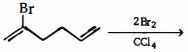
How many stereoisomeric pentabrornides will be formed in the following reaction ?
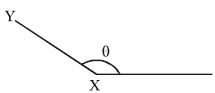
Which bond angle $\theta $ would result in the maximum dipole moment for triatomic molecule $XY_2$ shown below
The sum of $IE_1$ and $IE_2$. $IE_3$ and $IE_4$ for elements $P$ and $Q$ are given below

$(IE_1 + IE_2)$ $(IE_3 + IE_4)$
$(P)$ $2.45\, KJ/mol$ $8.82\, KJ/mol$
$(Q)$ $2.85\, KJ/mol$ $6.11\, KJ/mol$

then according to given information the incorrect statements is/are

The enthalpies of formation of $N_2O$ and $NO$ are $28$ and $90\, kJ\, mol^{-1}$ respectively. The enthalpy of the reaction, $2N_2O(g) + O_2(g) \to 4NO(g)$ is equal to.....$kJ$
Red lead is
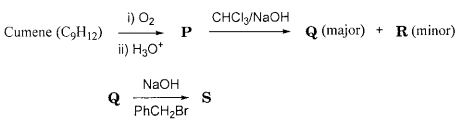
The correct statement($s$) about the following reaction sequence is(are)

(image)

($A$) $R$ is steam volatile

($B$) $Q$ gives dark violet coloration with $1 \%$ aqueous $FeCl_3$ solution

($C$) $S$ gives yellow precipitate with $2, 4$-dinitrophenylhydrazine

($D$) $S$ gives dark violet coloration with $1 \%$ aqueous $FeCl_3$ solution

$\begin{array}{*{20}{c}}
  {C{H_3} - CH - CH = C{H_2} + HBr \to X\,\left( {major\,product} \right)} \\ 
  {|\,\,\,\,\,\,\,\,\,\,\,\,\,\,\,\,\,\,\,\,\,\,\,\,\,\,\,\,\,\,\,\,\,\,\,\,\,\,\,\,\,\,\,\,\,\,\,\,\,\,\,\,\,\,\,\,\,\,\,\,\,\,\,\,\,\,\,\,\,\,\,\,\,\,\,\,\,\,\,\,\,\,\,\,\,\,\,\,\,\,\,\,\,\,\,\,\,\,\,\,\,\,\,\,\,\,} \\ 
  {C{H_3}\,\,\,\,\,\,\,\,\,\,\,\,\,\,\,\,\,\,\,\,\,\,\,\,\,\,\,\,\,\,\,\,\,\,\,\,\,\,\,\,\,\,\,\,\,\,\,\,\,\,\,\,\,\,\,\,\,\,\,\,\,\,\,\,\,\,\,\,\,\,\,\,\,\,\,\,\,\,\,\,\,\,\,\,\,\,\,\,\,\,\,\,\,\,\,\,\,\,} 
\end{array}$

$X$ is

Which of the following is prepared by electrolytic method
The ionic radii of $\mathrm{K}^{+}, \mathrm{Na}^{+}, \mathrm{Al}^{3+}$ and $\mathrm{Mg}^{2+}$ are in the order: