MCQ
When no current is passed through a conductor?
  • A
    The free electrons do not move.
  • B
    The average speed of a free electron over a large period of time is not zero.
  • C
    The average velocity of a free electron over a large period of time is zero.
  • D
    The average of the velocities of all the free electrons at an instant is non zero.

Answer

  1. The average of the velocities of all the free electrons at an instant is non zero.

Need a full question paper?

Generate a complete, print-ready paper with questions like this in minutes — across 16+ boards, with answer keys.

Start Generating Free

Similar questions

The energy density of magnetic field $\vec{B}$ is :

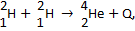
The binding energy of deuteron  is 1.112 MeV per nucleon and an α - particle  has a binding energy of 7.047 MeV per nucleon. Then in the fusion reaction  the energy Q released is

(a) 1 MeV

(b) 11.9 MeV

(c) 23.8 MeV

(d) 931 MeV

Which of the following is used for the formation of thermistor?
Magnetic field does not cause deflection in:

Gases begin to conduct electricity at low pressure because

(a) At low pressure, gases turn to plasma

(b) Colliding electrons can acquire higher kinetic energy due to increased mean free path leading to ionisation of atoms

(c) Atoms break up into electrons and protons

(d) The electrons in atoms can move freely at low pressure

The wavelength of  X-rays produced by an X-ray tube is 0.76 Å. The atomic number of the anode material of the tube is

(a) 20

(b) 60

(c) 40       

(d) 80

According to Bohr's theory the moment of momentum of an electron revolving in second orbit of hydrogen atom will be

(a) 2πh

(b) πh

(c)   

(d)  

L, C and R represent the physical quantities inductance, capacitance and resistance respectively. Which of the following combinations have dimensions of frequency?

The half life of  is 8 days. Given a sample of  at time t = 0, we can assert that

(a) No nucleus will decay before t = 4 days

(b) No nucleus will decay before t = 8 days

(c) All nuclei will decay before t = 16 days

(d) A given nucleus may decay at any time after t = 0

The curve of binding energy per nucleon as a function of atomic mass number has a sharp peak for helium nucleus. This implies that helium

(a) Can easily be broken up

(b) Is very stable

 (c) Can be used as fissionable material

(d) Is radioactive