MCQ
When potential difference is applied across an electrolyte, then Ohm’s law is obeyed at
  • A
    zero potential
  • B
    very low potential
  • C
    negative potential
  • high potential.

Answer

Correct option: D.
high potential.
high potential.

Need a full question paper?

Generate a complete, print-ready paper with questions like this in minutes — across 16+ boards, with answer keys.
Start Generating Free

Similar questions

A passenger sitting in a bus moving along a circular path experiences a force which is
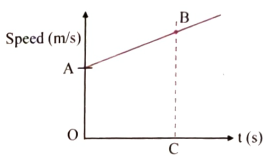
The speed versus time graph of a moving particle is shown in the following figure. If 'u' is the initial speed at t = 0 v is the speed at time 1, 'a' is the acceleration and 's' is the distance covered in time 't', then total area OABC is best described using, (Assume O as origin)
Image
A cylindrical rod having temperature $T_1$ and $T_2$ at its ends. The rate of flow of heat is $Q_1$ cells. If all the linear dimensional are doubled keeping temperature constant, then rate of flow of heat $Q_2$ will be
A body is projected with a vertical velocity of 30 m/s at an angle of $30^{\circ}$ with the horizontal, the maximum height and horizontal range are respectively
Consider a drop of rain water having mass 1g falling from a height of 1 km. It hits the ground with a speed of 50 m/s. Take 'g' constant with a value 10 $m / s ^2$. The work done by the (i) gravitational force and the (ii) resistive force of air is:
The equation of the wave is $y=10 \sin \left(\frac{2 \pi t}{30}+\alpha\right)$. If the displacement is $5 cm$ at $t=0$ then the total phase at $t=7.5 s$ will be $\left(\sin 30^{\circ}=0.5\right)$
The greatest height to which a man can throw a stone is h. The greatest distance to which he can throw it will be
Certain neutron stars are believed to be rotating at about 1 rev/s. If such a star has a radius of 20 km, the acceleration of an object on the equator of the star will be
A particle of unit mass undergoes one-dimensional motion such that its velocity varies according to $v(x)=\beta x^{-2 n}$ where $\beta$ and $n$ are constants and x is the position of the particle. The acceleration of the particle as a function of x, is given by
The electric field intensity at a point 2 m from an isolated point charge is 500 N/C. The electric potential at the point is