Question
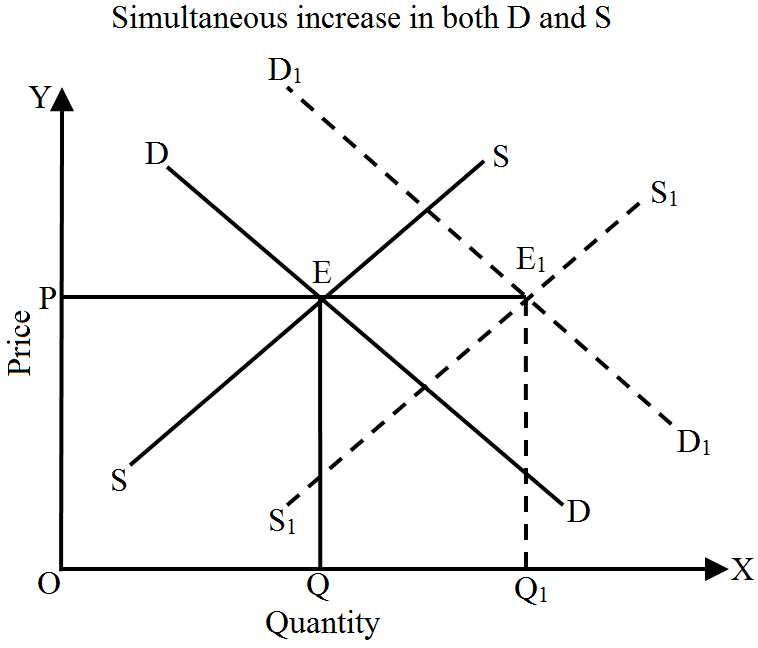
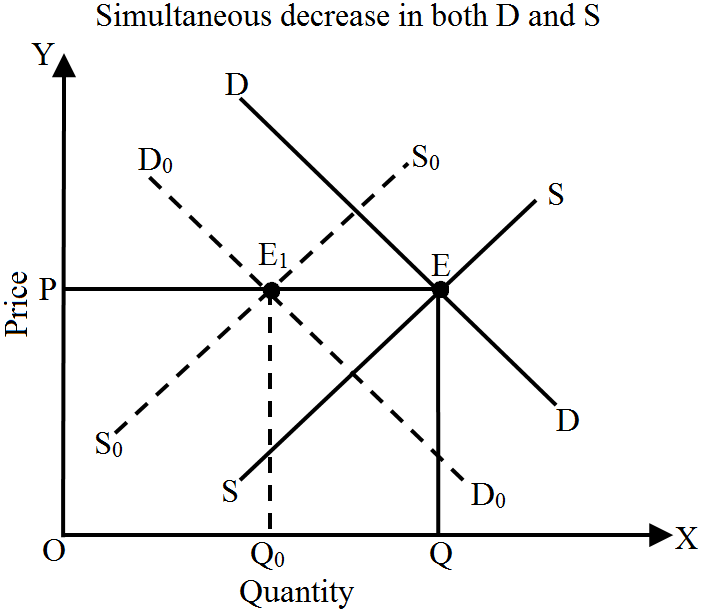
When will (a) simultaneous increase and (b) simultaneous decrease in both demand and supply, not affect the equilibrium price? Explain with the help of diagrams.

Need a full question paper?

Generate a complete, print-ready paper with questions like this in minutes — across 16+ boards, with answer keys.

Start Generating Free

Similar questions

Explain the conditions of a producer's equilibrium in terms of Marginal Cost and Marginal Revenue. Use diagram:
While calculating National Income of India from its domestic factor income, how will you treat the following? Give reasons for your answer.
  1. Salaries received by Indians working in branches of foreign banks in India.
  2. Profits earned by an Indian bank from their branches in abroad.
  3. Rent paid by embassy of Japan in India to an Indian resident.
How will an increase in the income of the buyers of an ‘inferior good’, affect its equilibrium price and equilibrium quantity? Explain with the help of a diagram.
How are the following treated while estimating expenditure on gross domestic product? Give reasons in support of your answer.
  1. Expenditure incurred on purchase of second hand goods.
  2. Expenditure incurred on purchase of new shares of a company.
  3. Expenditure incurred by a shopkeeper on purchase of garments from a garment manufacturer.
The price elasticity of demand of good X is half the price elasticity of demand of Good Y. A 25% rise in the price of good Y reduces its demand from 400 units to 300 units. Calculate percentage rise in demand of good X when its price falls from ₹ 10 to ₹ 8 per unit.
Explain the law of variable proportions through the behaviour of total and marginal product. Give reasons.

OR

Explain the law of variable proportions (or law of returns to a factor) with the help of total and marginal product curves. Use diagram.

OR

Explain the likely behaviour of TP and MP when for increasing production only one input is increased while all other inputs are kept constant.

OR

State the different phases of changes in Total Product and Marginal Product in the Law of Variable Proportions. Also show the same in a single diagram.

Given that fixed cost is ₹ 12, calculate TVC, TC, ATC and AVC from the following:
Output (units) 1 2 3 4 5 6
MC (₹) 9 7 2 4 8 12
A consumer consumes only two goods X and Y, both priced at Rs. 2 per unit. If the consumer chooses a combination of the two goods with Marginal Rate of Substitution equal to 2, is the consumer in equilibrium? Why or why not? What will a rational consumer do in this situation? Explain.
Market for a good is in equilibrium. Supply of the good 'increases'. Explain the chain of effects of this change.
How is the exchange rate determined under a flexible exchange rate regime?