MCQ
Which atom contains exactly 15 neutrons?
- AP32 (atomic number =17)
- BS32 (atomic number =16)
- CO15 (atomic number =8)
- DN15 (atomic number =7)
Explanation:
mass number = no.of protons + no.of neutrons
Given that mass number of P = 32
Atomic number (no. of electrons = no. of protons) = 17
Number of neutrons = 32 − 17 = 15
Hence, P satisfies the requirement.
Generate a complete, print-ready paper with questions like this in minutes — across 16+ boards, with answer keys.
The specific resistance of a wire is ρ, its volume is 3  and its resistance is 3 ohms, then its length will be
|
(a) |
(b) |
(c) |
(d) |
An ideal transformer has 500 and 5000 turn in primary and secondary windings respectively. If the primary voltage is connected to a 6V battery then the secondary voltage is
|
(a) 0 |
(b) 60 V |
(c) 0.6 V |
(d) 6.0 V |
Two wires of equal diameters, of resistivities  and
and  and lengths l1 and l2, respectively, are joined in series. The equivalent resistivity of the combination is
|
(a) |
(b) |
(c) 
|
(d) 
|
In a parabola spectrograph, the velocities of four positive ions P,Q,R and S are v1, v2, v3 and v4 respectively
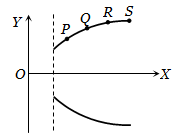
|
(a) |
(b) |
|
(c) |
(d) |
An electric fan and a heater are marked as 100 watt, 220 volt and 1000 watt, 220 volt respectively. The resistance of the heater is
|
(a) Zero |
(b) Greater than that of the fan |
|
(c) Less than that of the fan |
(d) Equal to that of the fan |
Forty electric bulbs are connected in series across a 220 V supply. After one bulb is fused, the remaining 39 are connected again in series across the same supply. The illumination will be
|
(a) More with 40 bulbs than with 39 |
(b) More with 39 bulbs than with 40 |
|
(c) Equal in both the cases |
(d) In the ratio of |






