MCQ
Which halide will be least reactive in respect to hydrolysis
- ✓Vinyl chloride
- BAllyl chloride
- CEthyl chloride
- D$t-$Butyl chloride
So, chlorine atom is not replaced easily.
Generate a complete, print-ready paper with questions like this in minutes — across 16+ boards, with answer keys.
Reaction $- (2): CH_3 -CH = CH -CH_3 \xrightarrow{KMn{{O}_{4}}/NaI{{O}_{4}}}(C)$ $2\,mole$
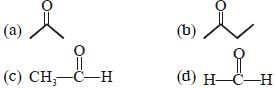
Product $(B)$ and $(C)$ respectively are
$C{H_3}C{H_2}OH\xrightarrow{{P + {I_2}}}A\xrightarrow[{ether}]{{Mg}} $ $B\xrightarrow{{HCHO}}C\xrightarrow{{{H_2}O}}D$
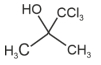
The correct statement($s$) regarding $P , Q , R$ and $S$ is(are)
$(A)$ Reaction of $P$ with $R$ in the presence of $KOH$ followed by acidification gives
$(B)$ Reaction of $R$ with $O _2$ in the presence of light gives phosgene gas
$(C)$ $Q$ reacts with aqueous $NaOH$ to produce $Cl _3 CCH _2 OH$ and $Cl _3 CCOONa$
$(D)$ $S$ on heating gives $P$