Question
Which is correct ?
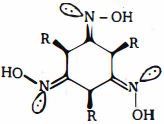
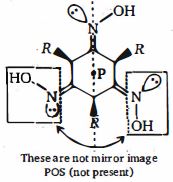
Generate a complete, print-ready paper with questions like this in minutes — across 16+ boards, with answer keys.
Assertion $A$ : A solution of the product obtained by heating a mole of glycine with a mole of chlorine in presence of red phosphorous generates chiral carbon atom.
Reason $R$ : A molecule with 2 chiral carbons is always optically active.
In the light of the above statements, choose the correct answer from the options given below:
Statement I: Both $\left[\mathrm{Co}\left(\mathrm{NH}_3\right) 6\right]^{3+}$ and $\left[\mathrm{CoF}_6\right]^3$ complexes are octahedral but differ in their magnetic behaviour.
Statement II: $\left[\mathrm{Co}\left(\mathrm{NH}_3\right)\right]^{3+}$ is diamagnetic whereas $\left[\mathrm{CoF} \mathrm{F}_6\right]^{3-}$ is paramagnetic.
In the light of the above statements, choose the correct answer from the options given below:
$L(1s^2, 2s^2 2p^4); Q(1s^2, 2s^2 2p^6, 3s^2 3p^5)$
$P(1s^2, 2s^2 2p^6, 3s^1); R(1s^2, 2s^2 2p^6, 3s^2)$
The formulae of ionic compounds that can be formed between these elements are