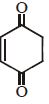
MCQ
Which is most reactive for nucleophilic addition reaction
  • A

  • B

  • C


Answer

Correct option: D.

d
Higher the electron density in the benzene ring more easily it will be attacked by an electrophile. Phenol has the highest electron density amongst all the given compound.

Need a full question paper?

Generate a complete, print-ready paper with questions like this in minutes — across 16+ boards, with answer keys.
Start Generating Free

Similar questions

Propene on hydroboration and oxidation produces
Magnetic and spin quantum number of an electron are $-1$ and $+1/2$ respectively. This electron cannot be in
The first ionization enthalpy of $Na , Mg$ and $Si$, respectively, are: $496,737$ and $786\; kJ\; mol ^{-1}$. The first ionization enthalpy $( kJ\; mol ^{-1})$ of $Al$ is
Product $(A)$ is
Match List-$I$ with List-$II$.

Choose the correct answer from the options given below:

Compare $\pi -$ bond strength between $B$ and $N$ given in two compounds

$(I)$  $\begin{array}{*{20}{c}}
  {{{(C{H_3})}_3}Si - NB{H_2}} \\ 
  {\,\,\,\,\,\,\,\,\,\,\,\,\,\,\,\,\,\,|} \\ 
  {\,\,\,\,\,\,\,\,\,\,\,\,\,\,\,\,\,\,\,\,\,\,\,\,\,\,\,\,\,\,\,\,\,\,Si{{(C{H_3})}_3}} 
\end{array}$         $(II)$   $\begin{array}{*{20}{c}}
  {{{(C{H_3})}_3}C - NB{H_2}} \\ 
  {\,\,\,\,\,\,\,\,\,\,\,\,\,\,\,\,\,|} \\ 
  {\,\,\,\,\,\,\,\,\,\,\,\,\,\,\,\,\,\,\,\,\,\,\,\,\,\,\,\,\,\,\,\,\,\,\,C{{(C{H_3})}_3}} 
\end{array}$

Ammonium carbamate $(NH_4COONH_2)$ when heated to $200\,^oC$ gives a mixture of $NH_3$ and $CO_2$ with a vapour density of $26$ at equilibrium. What is the degree of dissociation of ammonium carbamate ?
The enthalpies of combustion of $S(s)$ and $H_2(g)$ are $ -300$ and $-290\,\, kcal\,\, mol^{-1.}$ 

Given $SO_3(g) + H_2O(l) \rightarrow H_2SO_4(l)$
$\Delta H = -130\,\, kcal\, mol^{-1}$
$SO_2(g) + 1/2O_2(g) \rightarrow SO_3(g)$
$\Delta H = -100 \,\,kcal\,\, mol^{-1}$
the enthalpy of formation of $H_2SO_4(l)$ would be ......$kcal\, mol^{-1}$

Which of the following compound is hydrolysed most rapidly in aqueous $NaOH$
Molality of an aqueous solution of urea is $4.44 \mathrm{~m}$. Mole fraction of urea in solution is $x \times 10^{-5}$. Value of $x$ is. . . . . . (integer answer)