MCQ
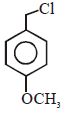
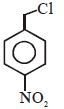
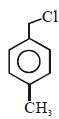
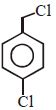
Which is most reactive for $SN^1$

  • B

  • C

  • D

Answer

Correct option: A.

a

Need a full question paper?

Generate a complete, print-ready paper with questions like this in minutes — across 16+ boards, with answer keys.

Start Generating Free

Similar questions

At $298 K$, the limiting molar conductivity of a weak monobasic acid is $4 \times 10^2 S cm ^2 mol ^{-1}$. At $298 K$, for an aqueous solution of the acid the degree of dissociation of $\alpha$ and the molar conductivity is $y \times 10^2 S cm ^2 mol ^{-1}$. At $298 K$, upon $20$ times dilution with water, the molar conductivity of the solution becomes $3 y \times 10^2 S cm ^2 mol ^{-1}$.

($1$) The value of $\alpha$ is. . . . . . 

($2$) The value of $y$ is. . . . . . .

Give the answer or quetion ($1$) and ($2$)
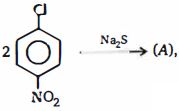
Equivalent mass of oxidizing agent in the reaction is $SO_2 + 2H_2S \to 3S + 2H_2O$ is
Product $(A)$ in this reaction is
In a catalytic conversion of ${N_2}$ to $N{H_3}$ by Haber's process, the rate of reaction was expressed as change in the concentration of ammonia per time is $40 \times {10^{ - 3}}\,mol\,litr{e^{ - 1}}{s^{ - 1}}$. If there are no side reaction, the rate of the reaction as expressed in terms of hydrogen is (in mol $litr{e^{ - 1}}{s^{ - 1}}$)
Which of the following is azo- group
The unit of rate constant for a zero order reaction is
Number of shared electrons in between carbon-carbon atoms in ethylene molecule is
$pH$  of a solution produced when an aqueous solution of $pH$ $6$  is mixed with an equal volume of an aqueous solution of $pH$ $3 $ is about
Two moles of an ideal monoatomic gas are allowed to expand adiabatically and reversibly from $300\,K$ to $200\,K.$ The work done in the process will be .....$kJ$
$92\  gms$ and $32\  gms$ of $NO_2(g)$ and $O_2(g)$ respectivley are taken in a rigid container and at a constant temperature they react to produce $N_2O_5(g)$ . The pressure in the container after the reaction was observed to be $\frac{7}{8}P$ where $P$ is initial pressure of the gasesous mixture. The percentage yield of the reaction is ....$\%$