MCQ
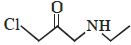
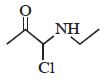
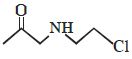
Which is most reactive halide towards ${{S}_{{{N}^{1}}}}$ reaction
  • A

  • B


  • D

Answer

Correct option: C.

c
Rate of ${{S}_{{{N}^{1}}}}$ reaction $\propto$ stability of carbocation

Need a full question paper?

Generate a complete, print-ready paper with questions like this in minutes — across 16+ boards, with answer keys.

Start Generating Free

Similar questions

Which of the following foodstuffs contains nitrogen
When $FeCl_3$ reacts with $K_4[Fe(CN)_6]$ then which of the following compound is formed
Consider the following ionisation reactions

$I.E.\, (kJ \,mol^{-1})$ $I.E.\, (kJ\, mol^{-1})$
$A_{(g)} \to A^+_{(g)}+e^-,$     $A_1$ $B_{(g)} \to B^{+}_{(g)}+e^-,$     $B_1$
$B^+_{(g)} \to B^{2+}_{(g)}+e^-,$     $B_2$ $C_{(g)} \to C^{+}_{(g)}+e^-,$     $C_1$
$C^+_{(g)} \to C^{2+}_{(g)}+e^-,$     $C_2$ $C^{2+}_{(g)} \to C^{3+}_{(g)}+e^-,$     $C_3$

If monovalent positive ion of $A,$ divalent positive ion of $B$ and trivalent  positive ion of $C$ have zero electron. Then incorrect order of corresponding  $I.E.$ is

Chloride ion and potassium ion are isoelectronic. Then
The crystal Field stabilization Energy $(CFSE)$ of $\left[ CoF _{3}\left( H _{2} O \right)_{3}\right]\left(\Delta_{0}< P \right)$ is $:-$
$p$-Amino- $N, N$-dimethylaniline is added to a strongly acidic solution of ${X}$. The resulting solution is treated with a few drops of aqueous solution of ${Y}$ to yield blue coloration due to the formation of methylene blue. Treatment of the aqueous solution of ${Y}$ with the reagent potassium hexacyanoferrate$(II)$ leads to the formation of an intense blue precipitate. The precipitate dissolves on excess addition of the reagent. Similarly, treatment of the solution of ${Y}$ with the solution of potassium hexacyanoferrate$(III)$ leads to a brown coloration due to the formation of ${Z}$.

$1.$ The compound ${X}$ is

$(A)$ $\mathrm{NaNO}_3$ $(B)$ $\mathrm{NaCl}$ $(C)$ $\mathrm{Na}_2 \mathrm{SO}_4$ $(D)$ $\mathrm{Na}_2 \mathrm{~S}$

$2.$ The compound ${Y}$ is

$(A)$ $\mathrm{MgCl}_2$ $(B)$ $\mathrm{FeCl}_2$ $(C)$ $\mathrm{FeCl}_3$ $(D)$ $\mathrm{ZnCl}_2$

$3.$ The compound ${Z}$ is

$(A)$ $\left.\mathrm{Mg}_2 \mid \mathrm{Fe}(\mathrm{CN})_6\right]$ $(B)$ $\operatorname{Fe}\left[\mathrm{Fe}(\mathrm{CN})_6\right]$

$(C)$ $\mathrm{Fe}_4\left[\mathrm{Fe}(\mathrm{CN})_6\right]_3$ $(D)$ $\mathrm{K}_2 \mathrm{Zn}_3\left[\mathrm{Fe}(\mathrm{CN})_6\right]_2$

Give the answer question $1,2$ and $3.$

Select the correct statement about $[Mn(CO)_4NO]$ which is diamagnetic
The equivalent conductance at infinite dilution of a weak acid such as $HF$
An element with atomic number $20$ will be placed in which period of the periodic table
The correct set of oxidation numbers of $Br$ in $Br_3O_8$ is