MCQ
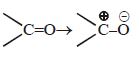
Which is wrong electromeric effect ?
  • A

  • B
    $CH_3 -CH=CH_2$ $\to$ $C{H_3} - \mathop {\mathop {CH}\limits^ \oplus   - \mathop {C{H_2}}\limits^{\Theta \,\,\,\,\,\,\,} }\limits^{\,\,\,\,\,\,\,\,\,\,\,\,\,\,\,\,\,\,\,\,\,\,\,\,\,\,\,\,\,\,} $
  • $C{H_3} - C \equiv N \to C{H_3} - \mathop C\limits^\Theta   = \mathop N\limits^ \oplus  $
  • D
    $CH \equiv CH \to \mathop {\mathop {CH}\limits^ \oplus   = \mathop {CH}\limits^\Theta  }\limits^{} $

Answer

Correct option: C.
$C{H_3} - C \equiv N \to C{H_3} - \mathop C\limits^\Theta   = \mathop N\limits^ \oplus  $
c

Need a full question paper?

Generate a complete, print-ready paper with questions like this in minutes — across 16+ boards, with answer keys.

Start Generating Free

Similar questions

Incorrect name is
If the atomic number of element $X$ is $7,$ the best electron dot symbol for the element is
The nodal plane in the $\pi^-$bond of ethene is located in:
Heat of neutralisation for the given reaction $NaOH + HCl \to NaCl + {H_2}O$ is $57.1\,kJ\,mo{l^{ - 1}}$. What will be the heat released when $0.25\,mole$ of $NaOH$ is titrated against $0.25\,mole$ of $HCl$ .......$kJ\,mo{l^{ - 1}}$
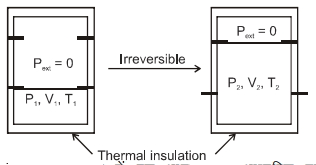
An ideal gas in a thermally insulated vessel at internal pressure $=P_1$, volume $=V_1$ and absolute temperature $= T _1$ expands irreversibly against zero external pressure, as shown in the diagram. The final internal pressure, volume and absolute temperature of the gas are $P _2, V _2$ and $T _2$, respectively. For this expansion,

$(A)$ $q=0$ $(B)$ $T_2=T_1$ $(C)$ $P_2 V_2=P_1 V_1$ $(D)$ $P_2 V_2^\gamma=P_1 V_1^\gamma$

Two element have electronegativity of $1.2$ and $3.0$. Bond formed between them would be
In ferrous ammonium sulphate oxidation number of $Fe$ is
Which of the following is not correctly matched
Given below are two statements: one is labelled as Assertion $(A)$ and the other is labelled as Reason $(R)$.

Assertion $(A)$ : $\mathrm{NH}_3$ and $\mathrm{NF}_3$ molecule have pyramidal shape with a lone pair of electrons on nitrogen atom. The resultant dipole moment of $\mathrm{NH}_3$ is greater than that of $\mathrm{NF}_3$.

Reason $(R)$ : In $\mathrm{NH}_3$, the orbital dipole due to lone pair is in the same direction as the resultant dipole moment of the $\mathrm{N}-\mathrm{H}$ bonds. $\mathrm{F}$ is the most electronegative element.

In the light of the above statements, choose the correct answer from the options given below:

Which of the following statement is not correct from the view point of molecular orbital theory?