MCQ
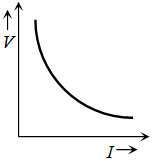
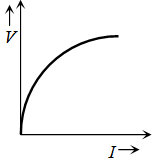
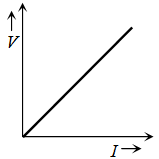
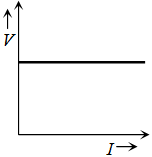
Which of the adjoining graphs represents ohmic resistance
  • B
     
  • C
     
  • D

Answer

Correct option: A.

Need a full question paper?

Generate a complete, print-ready paper with questions like this in minutes — across 16+ boards, with answer keys.
Start Generating Free

Similar questions

For a thermocouple, the neutral temperature is 270℃ and the temperature of its cold junction is 20℃. If there is no deflection in the galvanometer, the temperature of the hot junction should be(a) 210 ℃(b) 540 ℃(c) 520 ℃ (d) 209 ℃
       
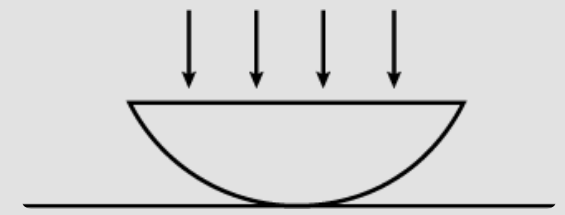
A thin slice is cut out of a glass cylinder along a plane parallel to its axis. The slice is placed on a flat glass plae as shown in figure. The observed interference fringes from this combination shall be:
The energy of electron in first Bohr's orbit of hydrogen atom is $-13.6$ eV. What is energy of electron in its 2nd Bohr's orbit ?
The example of non-ohmic resistance is:
In an $\text{L - C - R}$ circuit the value of $X_L​, X_C$​ and $R$ are $300\Omega,200\Omega$, and $100\Omega$ respectively. The total impedance of the circuit will be.
The strength of the magnetic field in which the magnet of a vibration magnetometer is oscillating is increased 4 times its original value. The frequency of oscillation would then become(a) Twice its original value(b) Four times its original value(c) Half its original value(d) One-fourth its original value
   
   
A magnetic field of $2 \times 10^{– 2} T$ acts at right angles to a coil of area $100 \ cm^2$ with $50$ turns. The average emf induced in the coil is $0.1 V,$ when it is removed from the field in time $t$. The value of $t$ is
Which of the following statement regarding transformer is incorrect?
The phenomenon of radioactivity is(a) Exothermic change which increases or decreases with temperature(b) Increases on applied pressure(c) Nuclear process does not depend on external factors (d) None of the above


If the temperature of cold junction of thermocouple is lowered, then the neutral temperature(a) Increases(b) Approaches inversion temperature(c) Decreases(d) Remains the same