MCQ
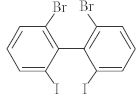
Which of the following biphenyls is optically active?
- A
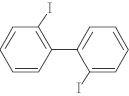
- B
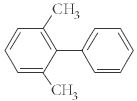
- C
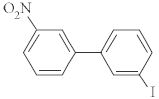
- ✓
Generate a complete, print-ready paper with questions like this in minutes — across 16+ boards, with answer keys.
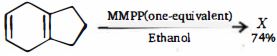
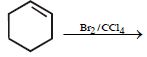
Oxidation state of central atom in compound $(B)$ is
$A$. All group $16$ elements form oxides of general formula $\mathrm{EO}_2$ and $\mathrm{EO}_3$ where $\mathrm{E}=\mathrm{S}, \mathrm{Se}, \mathrm{Te}$ and Po. Both the types of oxides are acidic in nature.
$B$. $\mathrm{TeO}_2$ is an oxidising agent while $\mathrm{SO}_2$ is reducing in nature.
$C$. The reducing property decreases from $\mathrm{H}_2 \mathrm{~S}$ to $\mathrm{H}_2 \mathrm{Te}$ down the group.
$D$. The ozone molecule contains five lone pairs of electrons.
Choose the correct answer from the options given below:


$\mathrm{M}(\mathrm{s}) \mid \mathrm{M}^{+}$(aq; $0.05$ molar) || $\mathrm{M}^{+}(\mathrm{aq}), 1$ molar) $\mid \mathrm{M}(\mathrm{s})$
For the above electrolytic cell the magnitude of the cell potential $\left|E_{\text {cell }}\right|=70 \mathrm{mV}$.
$1.$ For the above cell
$(A)$ $\mathrm{E}_{\text {cell }}<0 ; \Delta \mathrm{G}>0$ $(B)$ $\mathrm{E}_{\text {cell }}>0 ; \Delta \mathrm{G}<0$
$(C)$ $\mathrm{E}_{\text {cell }}<0 ; \Delta \mathrm{G}^{\circ}>0$ $(D)$ $\mathrm{E}_{\text {cell }}>0 ; \Delta \mathrm{G}^{\circ}>0$
$2.$ If the $0.05$ molar solution of $\mathrm{M}^{+}$is replaced by $0.0025$ molar $\mathrm{M}^{+}$solution, then the magnitude of the cell potential would be
$(A)$ $35 \mathrm{mV}$ $(B)$ $70 \mathrm{mV}$ $(C)$ $140 \mathrm{mV}$ $(D)$ $700 \mathrm{mV}$
Give the answer question $1,2.$