MCQ
Which of the following can not react with $NaHCO_3$
  • A

  • B

  • C

  • All

Answer

Correct option: D.
All
d

Need a full question paper?

Generate a complete, print-ready paper with questions like this in minutes — across 16+ boards, with answer keys.
Start Generating Free

Similar questions

The ionization isomer of $\left[\mathrm{Cr}\left(\mathrm{H}_2 \mathrm{O}\right)_4 \mathrm{Cl}\left(\mathrm{NO}_2\right)\right] \mathrm{Cl}$ is
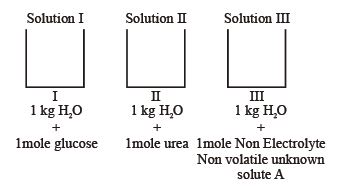
Order of $B.P$ of the solution formed is
Which of the following compounds would you expect to be strongest carbon acid ?
Appearance of blood red colour, on treatment of the sodium fusion extract of an organic compound with $\mathrm{FeSO}_4$ in presence of concentrated $\mathrm{H}_2 \mathrm{SO}_4$ indicates the presence of element/s
Given :

$E^o_{Fe^{3+} /Fe} = -0.036\,V,$  $E^o _{Fe^{2+} /Fe} = -0.439\,V$

The value of standard electrode potential for the change,

$Fe^{3+} (aq) + e^- \rightarrow Fe^{2+} (aq)$ will be ........ $V$.

A $2.0 \,g$ sample containing $MnO _{2}$ is treated with $HCl$ liberating $Cl _{2}$. The $Cl _{2}$ gas is passed into a solution of $KI$ and $60.0\, mL$ of $0.1\, M\, Na _{2} S _{2} O_{3}$ is required to titrate the liberated iodine. The percentage of $MnO _{2}$ in the sample is $.....$ (Nearest integer)

[Atomic masses (in $u$) $Mn =55 ; Cl =35.5 ; O =16, I =127, Na =23, K =39, S =32]$

Which of the following electronic configurations represents a sudden large gap between  the values of second and third ionisation energies of an element?
Which one of the following arrangements represents the correct order of electron gain enthalpy (with negative sign) of the given atomic species :-
$PC{l_5} + {P_4}{O_{10}}\xrightarrow{\Delta }$ oxygen containing compound $(X)$ .

How many moles of an oxy acid are formed on hydrolysis of $1$ mole $(X)$ .

The structural formula of cyclohexanol is