MCQ
Which of the following cannot be seen by a microscope?
- ASmall nearly objects
- BBacteria
- CStars
- DCells and virus
Which of the following cannot be seen by a microscope?
Explanation:
A microscope is an instrument used to see objects too small for the naked eye. microscope is used to look into smaller details like the structure of the cells and the unicellular organism. On the other hand larger objects that are very far off are the targets of a telescope. hence,stars cannot be seen by a microscope.
Generate a complete, print-ready paper with questions like this in minutes — across 16+ boards, with answer keys.
Compton effect is associated with
| (a) α - rays | (b) β - rays | (c) X-rays | (d) Positive rays |
In a PNP transistor the base is the N-region. Its width relative to the P-region is
|
(a) Smaller |
(b) Larger |
(c) Same |
(d) Not related |
The rest mass of an electron as well as that of positron is 0.51 MeV. When an electron and positron are annihilate, they produce gamma-rays of wavelength(s)
|
(a) 0.012 Å |
(b) 0.024 Å |
(c) 0.012 Å to ¥ |
(d) 0.024 Å to ¥ |
When light falls on a metal surface, the maximum kinetic energy of the emitted photo-electrons depends upon
|
(a) The time for which light falls on the metal |
|
(b) Frequency of the incident light |
|
(c) Intensity of the incident light |
|
(d) Velocity of the incident light |
In the connections shown in the adjoining figure, the equivalent capacity between A and B will be

|
(a) 10.8 μF |
(b) 69 μF |
(c) 15 μF |
(d) 10 μF |
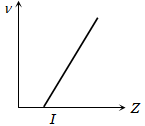
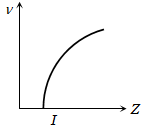
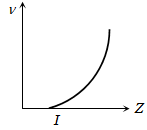
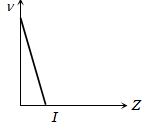
The graph that correctly represents the relation of frequency n of a particular characteristic X-ray with the atomic number Z of the material is
|
(a)
|
(b)
|
(c)
|
(d)
|
The minimum wavelength of X-ray emitted by X-rays tube is 0.4125 Å. The accelerating voltage is
|
(a) 30 kV |
(b) 50 kV |
(c) 80 kV |
(d) 60 kV |