MCQ
Which of the following elements has its end walls perforated
  • A
    Tracheid
  • Vessel
  • C
    Fiber
  • D
    Scleried

Answer

Correct option: B.
Vessel
b
(b) The opening in vessel element walls are called perforations, which may be simple perforation or multiple perforations.

Need a full question paper?

Generate a complete, print-ready paper with questions like this in minutes — across 16+ boards, with answer keys.

Start Generating Free

Similar questions

Match List $- I$ with List $- II.$

List $- I$ List $- II$
$(a)$ $S$ phase $(i)$ Proteins are synthesized
$(b)$ $G_2$ phase $(ii)$ Inactive phase
$(c)$ Quiescent stage $(iii)$  Interval between mitosis and initiation of $DNA$ replication
$(d)$ $\mathrm{G}_{1}$ phase $(iv)$ $DNA$ replication

Choose the correct answer from the options given below.

$(a) -(b) -(c)- (d)$
Dinucleotide is obtained by joining of two nucleotides together by phosphodiester linkage between which carbon of sugar of nucleotides are these linkages present?
Respiration is seen in
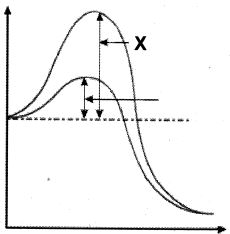
Identify $X$ in below figure.
The cell-mediated immunity inside the human body is carried out by:
Xenogamy or cross-pollination is performed by

$I$. Abiotic agencies

$II$. Biotic agencies

$III$. Insects only

Select the correct option for the given question

Ovule with funiculus lying close to micropyle is known as
Other names of secondary cortex, cork cambium and cork are
Fill in the blanks.
(i) The cambium is generally more active on the A side than on the B.
(ii) In the C season, cambium is very active and produces a large number of xylarly elements having vessels with wider cavities.
(iii) The D wood is lighter in colour and has a lower density.
(iv) The two kinds of woods that appear as alternate concentric rings, constitute an E.
(v) In old trees, the greater part of F xylem is dark brown due to deposition of organic compounds like tannins, resins, oils, gums.
(vi) In old trees, the region comprising dead elements with highly lignified walls and is called G wood.
(vii) The peripheral region of the secondary xylem is lighter in colour and is known as the H wood.
(viii) The I is impervious to water due to suberin deposition on the cell wall.
(ix) J phellem, and K are collectively known as periderm.
(x) L is a non-technical term that refers to all tissues exterior to the vascular cambium. When it is formed early in the season, it is called M or N bark.
(xi) In the dicot root, the vascular cambium is completely O in origin.
(xii) The ground tissue system forms the main bulk of the plant. It is divided into three zones- P, pericycle and Q.
(xiii) The wood is actually a secondary R.
The phytoplankton in the ponds act as