MCQ
Which of the following functions is discontinuous function?
  • A
    sin x
  • B
    X2
  • C
    $\frac{1}{1-2 x}$
  • D
    $\frac{1}{1+x^2}$

Answer

self

Need a full question paper?

Generate a complete, print-ready paper with questions like this in minutes — across 16+ boards, with answer keys.

Start Generating Free

Similar questions

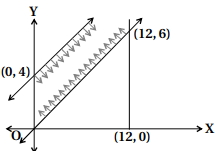
The feasible region for an $LPP$ is shown in the Figure. Let $z=3 x-4 y$ be the objective function.Minimum value of $Z$ is $....$
If the ordinate $x = a$ divides the area bounded by the curve $y = \left( {1 + \frac{8}{{{x^2}}}} \right)\,,$ $x - $ axis and the ordinates $x = 2,$ $x = 4$ into two equal parts, then $a = $
Given that $\int_0^\infty {\frac{{{x^2}\,dx}}{{({x^2} + {a^2})({x^2} + {b^2})({x^2} + {c^2})}} = \frac{\pi }{{2(a + b)(b + c)(c + a)}}} ,$ then the value of $\int_0^\infty {\frac{{{x^2}dx}}{{({x^2} + 4)({x^2} + 9)}}} $ is
If a unit vector $\vec r$ makes angles $\frac{\pi }{3}$ with $\hat i$, $\frac{\pi }{4}$ with $\hat j$ and $\theta  \in \left( {0,\pi } \right)$ with  $\hat k$, then a value of $\theta$ is
If a line makes angles $\alpha,\beta,\gamma$ with the axis then $\cos 2\alpha+ \cos 2\beta +\cos 2\gamma=$
If $\overrightarrow A = i + 2j + 3k,\,\,\,\overrightarrow B = - i + 2j + k$ and $\overrightarrow C = 3i + j,$ then the value of $t$ such that $\overrightarrow A + t\overrightarrow B $ is at right angle to vector $3i + 4j$ is
Area of the region bounded by the curve $y = \tan x,$ tangent drawn to the curve at $x = \frac{\pi }{4}$ and the $x -$ axis is
Evaluate $\begin{bmatrix}\text{x}^2&\text{x}^3&\text{x}^4\\\text{x}&\text{y}&\text{z}\\\text{x}^2&\text{x}^3&\text{x}^4\end{bmatrix}$ is:
  1. c
  2. 1
  3. xyz
  4. x2 yz3
Let $\vec \alpha =(\lambda -2) \vec a + \vec b$ and $\vec \beta = (4\lambda -2)\vec a + 3\vec b$ be two given vectors where $\vec a$ and $\vec b$ are non collinear. The value of $\lambda $ for which vectors and $\vec \alpha $ and $\vec \beta $ are collinear, is
The value of $\int_1^e \log x d x$ is