MCQ
Which of the following has highest octane number
  • A
    n-hexane
  • B
    n-heptane
  • Iso-octane
  • D
    n-heptane and iso-octane mixed in ratio $ 50 : 50$

Answer

Correct option: C.
Iso-octane
c
An aromatic compound has the highest octane number. The octane number of aromatic hydrocarbons are exceptionally high.

Need a full question paper?

Generate a complete, print-ready paper with questions like this in minutes — across 16+ boards, with answer keys.

Start Generating Free

Similar questions

If Avogadro number $N_A,$ is changed from $6.022 \times 10^{23}\ mol^{-1}$ to $6.022 \times 10^{20}\ mol^{-1},$ this would change
In carbon tetrachloride, four valence of carbon are directed to four corners of
The electronic configuration of central metal atom/ion in $\left[ Co ( CN )_{6}\right]^{3-}$ is
$\Delta H{^o _f}$ $(298\, K)$ of methanol is given by the chemical equation
$LiAl{H_4}$ converts acetic acid into
For the Galvanic cell :

$Ag(s)\,\,|\,\,A{g_2}{C_2}{O_4}(s)\,\,|\,\,{C_2}O_4^{2 - }(0.02\,M)\,\,||\,\,A{g^ + }(0.5\,M)\,\,|\,\,Ag(s)$

$EMF$ of cell is $0.264\ V$ at $25\,^oC$ . $K_{sp}$ of $Ag_2C_2O_4(s)$ is

$\left[ {Given = \frac{{2.303 \times 8.314 \times 298}}{{96500}} = \frac{{2.303RT}}{F} = 0.06,\,\log 2 = 0.3} \right]$
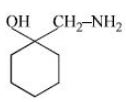
$[Figure]$  $\mathop {\xrightarrow{{NaN{O_2}}}}\limits_{HCl} $ $A$      $A$ is
Given below are two statements:

Statement $I$: Group $13$ trivalent halides get easily hydrolyzed by water due to their covalent nature.

Statement $II$: $\mathrm{AlCl}_3$ upon hydrolysis in acidified aqueous solution forms octahedral $\left[\mathrm{Al}\left(\mathrm{H}_2 \mathrm{O}\right)_6\right]^{3+}$ ion.

In the light of the above statements, choose the correct answer from the options given below :

$\begin{array}{*{20}{c}}
  {C{H_3} - CH - CH - C{H_3}} \\ 
  {\,\,|\,\,\,\,\,\,\,\,\,\,\,\,\,\,\,|\,\,\,\,\,\,\,} \\ 
  {Cl\,\,\,\,\,\,\,\,\,\,\,Cl\,\,\,} 
\end{array}$ $\xrightarrow[dry\,ether]{Na}X\xrightarrow[\left( 2 \right)\,{{H}_{2}}{{O}_{2}},\overset{\Theta }{\mathop{O}}\,{{H}_{\left( aq \right)}}]{\left( 1 \right)\,B{{H}_{3}},THF}Y;\,Y$ is
For the equilibrium $A \rightleftharpoons$ $B$ , the variation of the rate of the forward $(a)$ and reverse $(b)$ reaction with time is given by