MCQ
Which of the following is a nucleoside?
- AAdenosine, Adenylic acid, Cytosine
- ✓Adenosine, Guanosine, Cytidine
- CCytidylic acid, adenosine, Adenylic acid
- DGuanylic acid, Cytosine, Adnosine
Generate a complete, print-ready paper with questions like this in minutes — across 16+ boards, with answer keys.
$I$. causes partial oxidation of glucose (one molecule) to form $2$-molecules of pyruvic acid and $2$ $ATP$ as net gain
$II$. takes place in all living cells
$III$. uses $2$ $ATP$ at two steps
$IV$. scheme was given by Gustav Embden, Otto Mayerhof and J Parnas
Choose the correct option containing appropriate statements from the above
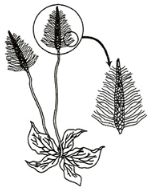
$(i)$ They are saprophytic protists.
$(ii)$ Under suitable conditions, they form an aggregation (called plasmodium) which may grow and spread over several feet.
$(iii)$ During unfavourable conditions, the plasmodium differentiates and forms fruiting bodies bearing spores at their tips.
Which of the following class of protists is being described by the above statements