MCQ
Which of the following is a transitional element
- A$Al$
- B$As$
- ✓$Ni$
- D$Rb$
Explanation:
The electronic configuration of nickel is $[ Ar ] 3 d ^8 4 s ^2$ which is in sync with the general electronic configuration of a transition element $(n-1) d^{1-10} ns ^2$.
Aluminum, arsenic, and lead don't possess the required configuration so they are not the transition elements.
The electronic configuration of Nickel is $[ Ar ] 3 d ^8 4 s ^2$. So it is a transition element.
Generate a complete, print-ready paper with questions like this in minutes — across 16+ boards, with answer keys.
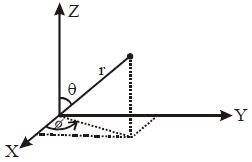
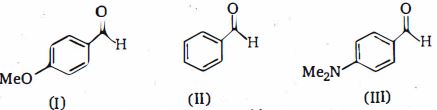
$\begin{array}{*{20}{c}} {N \equiv C} \\ {N \equiv C}\end{array}\,\,\left. {} \right\rangle C = C\,\left\langle {} \right.\,\begin{array}{*{20}{c}} {C \equiv N} \\ {C \equiv N} \end{array}$
|
List$-I$ (Metal Ion) |
List$-II$ (Group in Qualitative analysis) |
| $(a)$ ${Mn}^{2+}$ | $(i)$ Group $- III$ |
| $(b)$ ${A} {s}^{3+}$ | $(ii)$ Group $- IIA$ |
| $(c)$ ${Cu}^{2+}$ | $(iii)$ Group $- IV$ |
| $(d)$ ${Al}^{3+}$ | $(iv)$ Group $- IIB$ |
Choose the most appropriate answer from the options given below :