MCQ
Which of the following is violating Hund's rule
- A
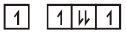
- B

- C
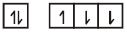
- ✓All of the above
Generate a complete, print-ready paper with questions like this in minutes — across 16+ boards, with answer keys.
Statement $(I)$ : $\mathrm{SiO}_2$ and $\mathrm{GeO}_2$ are acidic while $\mathrm{SnO}$ and $\mathrm{PbO}$ are amphoteric in nature.
Statement $(II)$ : Allotropic forms of carbon are due to property of catenation and $\mathrm{p} \pi-\mathrm{d} \pi$ bond formation.
In the light of the above statements, choose the most appropriate answer from the options given below:
$PCl _{5}( g ) \rightleftharpoons PCl _{3}( g )+ Cl _{2}( g )$
$5$ moles of $PCl _{5}$ are placed in a $200$ $litre$ vessel which contains $2\, moles$ of $N _{2}$ and is maintained at $600 \,K$. The equilibrium pressure is $2.46 \,atm$. The equilibrium constant $K _{ p }$ for the dissociation of $PCl _{5}$ is $......\,\times 10^{-3}$. (nearest integer)
(Given: $R =0.082\, L \,atm \,K ^{-1} \,mol ^{-1}$ : Assume ideal gas behaviour)
$2NOCl\left( g \right) \rightleftharpoons 2NO\left( g \right) + C{l_2}\left( g \right)$
Given : $K_P = 8 \times 10^{12}\, atm$ at $500\, K$ use $R = 0.08\, L\, atm\, mol^{-1}\, K^{-1}$