MCQ
Which of the following properties show gradual decrease with increase in atomic number across a period in the periodic table
  • A
    Electron affinity
  • B
    Ionization potential
  • C
    Electronegativity
  • Size of atom

Answer

Correct option: D.
Size of atom
d
Across a period size of atom decrease with increase in atomic number due to increase in effective nuclear charge.

Need a full question paper?

Generate a complete, print-ready paper with questions like this in minutes — across 16+ boards, with answer keys.
Start Generating Free

Similar questions

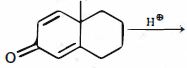
Predict the major product
Ammonia under a pressure of $15$ atm at $27\,^oC$ is heated to $347\,^oC$ in a closed vessel in the presence of a catalyst. Under the conditions, $N{H_3}$ is partially decomposed according to the equation, $2N{H_3}$ $\rightleftharpoons$ ${N_2} + 3{H_2}$.The vessel is such that the volume remains effectively constant where as pressure increases to $50$ $atm.$ Calculate the percentage of $N{H_3}$ actually decomposed........$\%$
The liquefied metal which expands on solidification is
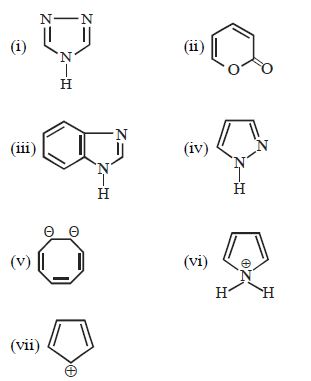
Identify the number of aromatic compounds
An atom with high electronegativity has
The minimum energy that must be possessed by photons in order to produce the photoelectric effect with platinum metal is $....\,\times 10^{-19} \,J$

[Given: The threshold frequency of platinum is $1.3$ $\times 10^{15} \,s ^{-1}$ and $h =6.6 \times 10^{-34} \,J \,s$.]
Arrange the following bonds in order of increasing dipole moment ? $\ce{B−C, C−N, C−O, C−C}$
The $\ce{pH}$ of neutral water at $25^\circ C$ is $7.0.$ As the temperature increases, ionisation of water increases, however, the concentration of $\ce{H}^+$ ions and $\ce{OH}^-$ ions are equal. What will be the $\ce{pH}$ of pure water at $60^\circ C\ ?$
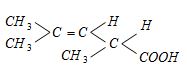
The following compound can exhibits
The thermal dissociation equilibrium of $CaCO _3( s )$ is studied under different conditions.

$CaCO _3( s ) \rightleftharpoons CaO ( s )+ CO _2( g )$

For this equilibrium, the correct statement(s) is (are)

$(A)$ $\Delta H$ is dependent on $T$

$(B)$ $K$ is independent of the initial amount of $CaCO _3$

$(C)$ $K$ is dependent on the pressure of $CO _2$ at a given $T$

$(D)$ $\Delta H$ is independent of the catalyst, if any