- The power of a converging lens.
- The focal length of a converging lens.
- The power of a diverging lens.
- The focal length of a diverging lens.
Explanation:
The focal length of a lens is inversely proportional to the refractive index of the lens and the refractive index of the lens is inversely proportional to the square of wavelength. Therefore, the focal length is directly dependent on wavelength; it increases when the wavelength is increased.
Generate a complete, print-ready paper with questions like this in minutes — across 16+ boards, with answer keys.
A proton and an α - particle enter a uniform magnetic field perpendicularly with the same speed. If proton takes 25 μ sec to make 5 revolutions, then the periodic time for the α - particle would be
|
(a) 50 μ sec |
(b) 25 μ sec |
(c) 10 μ sec |
(d) 5 μ sec |
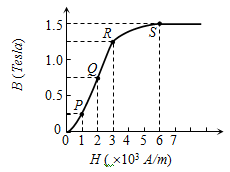
The basic magnetization curve for a ferromagnetic material is shown in figure. Then, the value of relative permeability is highest for the point

|
(a) P |
(b) Q |
(c) R |
(d) S |
When a ray of light emerges from a block of glass, the critical angle is
|
(a) Equal to the angle of reflection |
|
(b) The angle between the refracted ray and the normal |
|
(c) The angle of incidence for which the refracted ray travels along the glass-air boundary |
|
(d) The angle of incidence |
When the length of a microscope tube increases, its magnifying power:
The electromagnetic waves do not transport
| (a) Energy | (b) Charge | (c) Momentum | (d) Information |
Two charges are at a distance ‘d’ apart. If a copper plate (conducting medium) of thickness is placed between them, the effective force will be
|
(a) 2F |
(b) F / 2 |
(c) 0 |
(d) |