MCQ
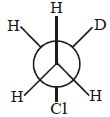
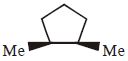
Which of the following show optical isomersim
  • A

  • B

  • C

  • All

Answer

Correct option: D.
All
d

Need a full question paper?

Generate a complete, print-ready paper with questions like this in minutes — across 16+ boards, with answer keys.

Start Generating Free

Similar questions

In balmer series of lines of hydrogen spectrum, the third line from the red end corresponds to which one of the following inter-orbit jumps of the electron for Bohr orbits in an atom of hydrogen
For the reaction at $300\,K$

$A(g) + B(g) \to C(g)$  $\Delta U=\,-\,3\,Kcal$

                                             $\Delta S=\,-\,10\,cal/K$

value of $\Delta G$ will be ......$cal$

Mass can neither be created nor destroyed. This is in agreement with which law of chemical combination?
In the commercial electrochemical process for aluminium extraction, the electrolyte used is
All bond lengths are identical in :-
The maximum wavelength of radiation that can ionise a sodium atom is $2414 \,\mathop A\limits^o .$ The ionisation energy of sodium per mole shall be
Calculate the $\Delta _fH^o$ of $N_2H_4(g)$ if

$B.E(N -N) = 159\, kJ\, mol^{-1}$,

$B.E(H -H) = 436\, kJ\, mol^{-1}$

$B.E.(N \equiv  N) = 941\, kJ\, mol^{-1}$,

$B.E(N -H) = 398\, kJ\, mol^{-1}\, .......\,kJ\, mol^{-1}$

Identify a molecule which does not exist.
Which is an electrophile
In conversion of lime-stone to lime,

$CaCO _{3}( s ) \rightarrow CaO ( s )+ CO _{2}( g )$ the values of $\Delta H ^{\circ}$ and $\Delta S^{\circ}$ are $+179.1 kJ mol ^{-1}$ and $160.2\,J / K$ respectively at $298 \,K$ and $1 \,bar$. Assuming that $\Delta H ^{\circ}$ and $\Delta S ^{\circ}$ do not change with temperature, temperature above which conversion of lime-stone to lime will be spontaneous is ........... $K$