MCQ
Which of the two have same dimensions
  • A
    Force and strain
  • B
    Force and stress
  • Angular velocity and frequency
  • D
    Energy and strain

Answer

Correct option: C.
Angular velocity and frequency
(c) $\omega=\frac{d \theta}{d t}=\left[T^{-1}\right]$ and frequency $[n]=\left[T^{-1}\right]$

Need a full question paper?

Generate a complete, print-ready paper with questions like this in minutes — across 16+ boards, with answer keys.

Start Generating Free

Similar questions

Which of the following is a slow process
We wish to see inside an atom. Assuming the atom to have a diameter of $100\  \mathrm{pm}$, this means that one must be able to resolved a width of say $10$ p.m. If an electron microscope is used, the minimum electron energy required is about
The focal length of the field lens (which is an achromatic combination of two lenses) of telescope is $90 \mathrm{~cm}$. The dispersive powers of the two lenses in the combination are $0.024$ and $0.036.$ The focal lengths of two lenses are
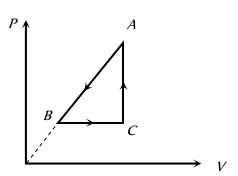
$P-V$ diagram of a cyclic process $A B C A$ is as shown in figure. Choose the correct statementImage
An ammeter of $5 \mathrm{ohm}$ resistance can read $5 \mathrm{~mA}$. If it is to be used to read 100 volts, how much resistance is to be connected in series
The work function of a metal is $1.6 \times 10^{-19} \mathrm{~J}$. When the metal surface is illuminated by the light of wavelength $6400 \mathring A$, then the maximum kinetic energy of emitted photo-electrons will be (Planck's constant $h=6.4 \times 10^{-34} \mathrm{Js}$ )
A jet plane flies in the air because
If $g$ is the acceleration due to gravity at the earth's surface and $r$ is the radius of the earth, the escape velocity for the body to escape out of earth's gravitational field is
A tuning fork sounded together with a tuning fork of frequency $256$ emits two beats. On loading the tuning fork of frequency $256,$ the number of beats heard are $1$ per second. The frequency of tuning fork is
A proton is accelerating in a cyclotron where the applied magnetic field is $2 \,T$. If the potential gap is effectively $100 \,kV$ then how much revolutions the proton has to make between the "dees" to acquire a kinetic energy of $20 \,MeV$ ?