MCQ
Which one of the following complexes will have four isomer 
  • $[Co(en)(NH_3)_2Cl_2]Cl$
  • B
    $[Co(PPh_3)_2(NH_3)_2Cl_2]Cl$
  • C
    $[Co(en)_3]Cl_3$
  • D
    $[Co(en)_2Cl_2]Br$

Answer

Correct option: A.
$[Co(en)(NH_3)_2Cl_2]Cl$
a
The complex $\left[ Co ( en )\left( NH _3\right)_2 Cl _2\right] Cl$ has four isomers. In one isomer, two ammonia ligands are trans to each other. In the other isomer, the chlorine ligands are trans to each other. In the third isomer the ammonia ligands are cis to each other and chlorine ligands are also cis to each other. This is optically active and exists in $d$ and $l$ forms. Thus, total four isomers are possible.

Need a full question paper?

Generate a complete, print-ready paper with questions like this in minutes — across 16+ boards, with answer keys.

Start Generating Free

Similar questions

What is true about $S_8$ molecule ?

$I.$ There is no $P_{\pi } -P_{\pi }$ bonds present in the molecule

$II.$ There are eight lone pair of electrons

$III.$ Each $S$ atom is $sp^3$ hybridised
Which biomolecule forms starch iodine complex
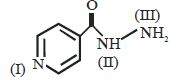
Isoniazid is used in the treatment of tuberculosis and multiple sclerosis. Identify the least basic $N$ present in it
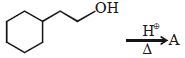
is major product so, $A$ is
Solute when dissolved in water
Which one is an example of solid solution?
Arrange the following Cobalt complexes in the order of increasing Crystal Field Stabilization Energy $(CFSE)$ value.

Complexes : $\left[\mathrm{CoF}_{6}\right]^{3-},\left[\mathrm{Co}\left(\mathrm{H}_{2} \mathrm{O}\right)_{6}\right]^{2+},\left[\mathrm{Co}\left(\mathrm{NH}_{3}\right)_{6}\right]^{3+}$ and $\left[\mathrm{Co}(\mathrm{en})_{3}\right]^{3+}$

$\quad\quad\quad\quad\quad\quad A\quad\quad\quad\quad \quad B\quad\quad\quad\quad\quad\quad C\quad\quad\quad\quad\quad\quad D$

Choose the correct option:

Which of the following is water soluble vitamin ?
What minimum decomposition potential is necessary to produce $Cl_2$ gas in following reaction ................ $\mathrm{V}$ 

Given :( $\frac{{2.303RT}}{F} = 0.06)$

$s{n^{ + 2}}\left( {1M} \right) + 2C{l^ - }\left( {2M} \right) \rightleftharpoons s{n_{\left( s \right)}} + C{l_2}\left( {1\,atm} \right)$

Given : ${E^o}_{s{n^{ + 2}}/sn} =  - 0.14$      ${E^o}_{C{l_2}/C{l^- }} = 1.4\,V$

Which of the following is by-product in the reaction of obtaining phenol from cumene?