MCQ
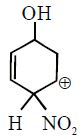
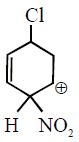
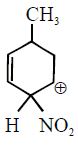
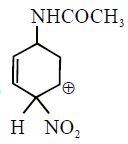
Which one of the following is most stable carbocation
  • A

  • B


  • D

Answer

Correct option: C.

c

Need a full question paper?

Generate a complete, print-ready paper with questions like this in minutes — across 16+ boards, with answer keys.

Start Generating Free

Similar questions

If uncertainty in position and momentum are equal, then uncertainty in velocity is
When an inflated tyre bursts, the air escaping out will:
Which of the following compound is wrongly named ?
Write the $IUPAC$ name of  $\begin{array}{*{20}{c}}
  {\,\,\,\,H\,\,\,\,\,\,\,\,\,\,\,\,\,\,\,\,\,\,\,\,\,\,\,\,\,\,\,\,\,\,\,\,\,\,\,\,\,\,\,\,\,\,\,\,\,\,\,\,\,\,\,\,\,\,\,\,\,\,\,Br} \\ 
  {\,|\,\,\,\,\,\,\,\,\,\,\,\,\,\,\,\,\,\,\,\,\,\,\,\,\,\,\,\,\,\,\,\,\,\,\,\,\,\,\,\,\,\,\,\,\,\,\,\,\,\,\,\,\,\,\,\,\,\,\,\,\,\,\,\,\,|} \\ 
  {C{H_3} - C - C{H_2} - C{H_2} - C{H_2} - C - C{H_3}} \\ 
  {\,|\,\,\,\,\,\,\,\,\,\,\,\,\,\,\,\,\,\,\,\,\,\,\,\,\,\,\,\,\,\,\,\,\,\,\,\,\,\,\,\,\,\,\,\,\,\,\,\,\,\,\,\,\,\,\,\,\,\,\,\,\,\,\,\,\,\,|} \\ 
  {\,\,OH\,\,\,\,\,\,\,\,\,\,\,\,\,\,\,\,\,\,\,\,\,\,\,\,\,\,\,\,\,\,\,\,\,\,\,\,\,\,\,\,\,\,\,\,\,\,\,\,\,\,\,\,\,\,\,\,\,\,\,Br} 
\end{array}$
At $90\,^oC$ , pure water has $[H^+] = 10^{-6}\,M$ , if $100\, mL$ of $0.2\, M\, HCl$ is added to $200\, mL$ of $0.1\, M\, KOH$ at $90\,^oC$ then $pH$ of the resulting solution will be
The elements having the electronic configuration, [$Kr$] $4{d^{10}}{f^{14}},\,5{s^2}{p^6}{d^2},\,6{s^2}$ belongs to
If $\Delta S$=+ve for an endothermic reaction, then reaction is only possible when :
Which of the following reactions will not produce a racemic product ?
An organic compound has an empirical formula $C{H_2}O$, its vapour density is $45$. The molecular formula of the compounds is
The correct statements from the following are :

$(A)$ The decreasing order of atomic radii of group $13$ elements is $\mathrm{Tl}>\mathrm{In}>\mathrm{Ga}>\mathrm{Al}>\mathrm{B}$.

$(B)$ Down the group $13$ electronegativity decreases from top to bottom.

$(C)$ $\mathrm{Al}$ dissolves in dil. $\mathrm{HCl}$ and liberate $\mathrm{H}_2$ but conc. $\mathrm{HNO}_3$ renders Al passive by forming a protective oxide layer on the surface.

$(D)$ All elements of group 13 exhibits highly stable +1 oxidation state.

$(E)$ Hybridisation of $\mathrm{Al}$ in $\left[\mathrm{Al}\left(\mathrm{H}_2 \mathrm{O}\right)_6\right]^{3+}$ ion is $\mathrm{sp}^3 \mathrm{~d}^2$.

Choose the correct answer from the options given below: