Question
Which physical quantity has the unit Wb/m2 ? Is it a scalar or a vector quantity?

Answer

Magnetic field induction has the unit Wb/m2. It is a vector quantity.

Need a full question paper?

Generate a complete, print-ready paper with questions like this in minutes — across 16+ boards, with answer keys.
Start Generating Free

Similar questions

If an electric dipole is placed at an angle of $30^{\circ}$ to an electric field of intensity $2 \times 10^5 N / C$, a torque of 4 Nm is applied on it. If the length of the dipole is 2 cm , then what will be charge?
Answer the following questions regarding earth’s magnetism:
The angle of dip at a location in southern India is about 18° Would you expect a greater or smaller dip angle in Britain?
Current I flow through two parallel straight wires in the same direction/The wires are at a distance 2r from each other. What is the intensity of magnetic field atw the midpoint between the two wires?
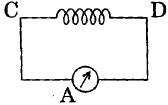
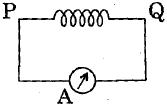
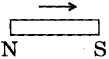
A bar magnet is moved in the direction indicated by the arrow between two coils PQ and CD. Predict the directions of induced current in each coil.

Is energy produced when a transformer steps up the voltage?
Show that for a wave travelling on a string:

$\frac{\text{y}_\text{max}}{\text{u}_\text{max}}=\frac{\text{v}_\text{max}}{\text{a}_\text{max}},$

Where the symbols have usual meanings. Can we use componendo and dividendo taught in algebra to write,

$\frac{\text{y}_\text{max}+\text{v}_\text{max}}{\text{y}_\text{max}-\text{v}_\text{max}}=\frac{\text{v}_\text{max}+\text{a}_\text{max}}{\text{v}_\text{max}-\text{a}_\text{max}}?$

If a core of iron is inserted in the middle of a coil, then what is the effect on the magnitude of its self- inductance?
What is the height of the final image of the tower if it is formed at 25cm?
In a rotating body, $\text{a}=\alpha\text{r}$ and $\text{v}=\omega\text{r}.$ Thus $\frac{\text{a}}{\alpha}=\frac{\text{v}}{\omega}.$ Can a co you use the theorems of ratio and proportion studied in algebra so as to write

$\frac{\text{a}+\alpha}{\text{a}-\alpha}=\frac{\text{v}+\omega}{\text{v}-\omega}$

In a P-N junction, what is the potential in the P-part near the junction plane?