MCQ
Which salt is colourless?
  • A
    $KMnO_4$
  • $BaSO_4$
  • C
    $Na_2CrO_4$
  • D
    $COCl_2$

Answer

Correct option: B.
$BaSO_4$
b
$(a)$ $\mathrm{KMnO}_{4} \quad:$ Pink/Purple

$(b)$ $BaSO $$_{4}$ : Colourless

$(c)$ $\mathrm{Na}_{2} \mathrm{CrO}_{4}:$ Yellow

$(d)$ $\mathrm{CoCl}_{2} \quad$ : Blue compound

Need a full question paper?

Generate a complete, print-ready paper with questions like this in minutes — across 16+ boards, with answer keys.

Start Generating Free

Similar questions

Find out which of the following statement are true & False

$(a)$ Number of $S-S$ bonds in $H_2S_nO_6$ are $(n +1)$

$(b)$ When $F_2$ reacts with $H_2O$ it forms $HF,$ $O_2$ & $O_3.$

$(c)$ $XeF_6$ on hydrolysis shows disproportionation reaction

$(d)$ $Al$ metal on reacting with dilute $NaOH$ gives a white precipitate of $Al (OH)_3$ as a final product
${K_f}$ of $1,4\,-$ dioxane is $4.9\,mo{l^{ - 1}}$ for $1000\,g$. The depression in freezing point for a $ 0.001\,m$  solution in dioxane is
The calorific values of fats, carbohydrates and proteins vary in the order
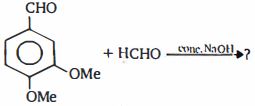
The following reaction gives
Which one of the following complexes will most likely absorb visible light?
(At nos. $Sc = 21 , Ti = 22, V = 23, Zn = 30$)
Consider the given reaction

$RCOOAg \xrightarrow{{B{r_2}/\Delta }} R-Br$

which one of the following acid will give maximum yield of $R-Br$ in the above reaction?

.........  $gm$ weight of non-volatile solute having molecular weight $40$, which should be dissolve in $57\, g$ octane to reduce its vapour pressure to $80\%$.
Assertion : $4-$ Nitrochlorobenzene undergoes nucleophilic substitution more readily than chlorobenzene.
Reason : Chlorobenzene undergoes nucleophilic substitution by elimination-addition mechanism while $4-$ nitrochlorobenzene undergoes nucleophilic substitution by addition-elimination mechanism.
One mole of the complex compound $Co(NH_3)_5Cl_3,$ gives $3$ moles of ions on dissolution in water. One mole of the same complex reacts with two moles of $AgNO_3$ solution to yield two moles of $AgCl(s).$ The structure of the complex is :-
The fermentation of starch to give alcohol occurs mainly with the help of