Question
Which source is associated with a line emission spectrum
|
(a) Electric fire |
(b) Neon street sign |
(c) Red traffic light |
(d) Sun |
Which source is associated with a line emission spectrum
|
(a) Electric fire |
(b) Neon street sign |
(c) Red traffic light |
(d) Sun |
(b) Neon street sign
Generate a complete, print-ready paper with questions like this in minutes — across 16+ boards, with answer keys.
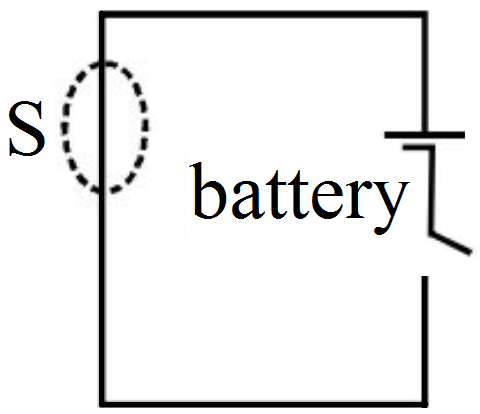
The number of photo-electrons emitted per second from a metal surface increases when
|
(a) The energy of incident photons increases |
|
(b) The frequency of incident light increases |
|
(c) The wavelength of the incident light increases |
|
(d) The intensity of the incident light increases |
In the circuit shown in the adjoining figure, the current between B and D is zero, the unknown resistance is of

|
(a) 4 Ω |
|
(b) 2 Ω |
|
(c) 3 Ω |
|
(d) em.f. of a cell is required to find the value of X |
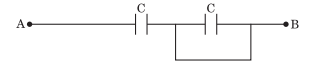
If  be the electric field strength of a short dipole at a point on its axial line and
  that on the equatorial line at the same distance, then
|
(a) |
(b) |
(c) |
(d) None of the above |
A thin glass (refractive index 1.5) lens has optical power of -5D in air. It's optical power in a liquid medium with refractive index 1.6 will be
|
(a) 25 D |
(b) – 25 D |
(c) 1 D |
(d) None of these |
To explain his theory, Bohr used
|
(a) Conservation of linear momentum |
|
(b) Conservation of angular momentum |
|
(c) Conservation of quantum frequency |
|
(d) Conservation of energy |
How many NAND gates are used to form an AND gate
|
(a) 1 |
(b) 2 |
(c) 3 |
(d) 4 |


