MCQ
Which theory of light explains the photoelectric effect?
- AElectromagnetic theory
- BMagnetic theory
- CElectric theory
- DWave theory
Explanation:
According to the electromagnetic theory, the photoelectric effect can be attributed to the transfer of energy from the light to an electron. From this point of view, an alteration in the intensity of light will induce changes in the kinetic energy of the electrons emitted from the metal.
Generate a complete, print-ready paper with questions like this in minutes — across 16+ boards, with answer keys.
The ratio of charge to potential of a body is known as
|
(a) Capacitance |
(b) Conductance |
(c) Inductance |
(d) Resistance |
In the given nuclear reaction A, B, C, D, E represents 


|
(a) A = 234, B = 90, C = 234, D = 91, E = β |
|
(b) A = 234, B = 90, C = 238, D = 94, E = α |
|
(c) A = 238, B = 93, C = 234, D = 91, E = β |
|
(d) A = 234, B = 90, C = 234, D = 93, E = α |
Assuming photoemission to take place, the factor by which the maximum velocity of the emitted photoelectrons changes when the wavelength of the incident radiation is increased four times, is
|
(a) 4 |
(b) |
(c) 2 |
(d) |
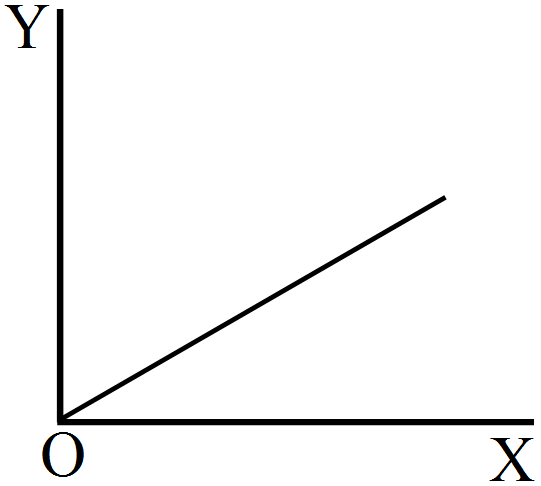
The radius of curvature of the path of the charged particle in a uniform magnetic field is directly proportional to
|
(a) The charge on the particle |
(b) The momentum of the particle |
|
(c) The energy of the particle |
(d) The intensity of the field |

