MCQ
Which type of substance is copper?
- ✓Dimagnetic
- BParamagnetic
- CFerromagnetic
- DNon-magnetic
Generate a complete, print-ready paper with questions like this in minutes — across 16+ boards, with answer keys.
The variation of wavelength λ of the  line with atomic number Z of the target is shown by the following curve of
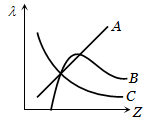
|
(a) A |
(b) B |
(c) C |
(d) None of these |
In the given circuit if point C is connected to the earth and a potential of +2000 V is given to the point A, the potential at B is

|
(a) 1500 V |
(b) 1000 V |
(c) 500 V |
(d) 400 V |
The magnetic moment of atomic neon is
| (a) Zero | (b) μB/2 | (c) μB | (d) 3μB/2 |
The materials suitable for making electromagnets should have
|
(a) High retentivity and high coercivity |
(b) Low retentivity and low coercivity |
|
(c) High retentivity and low coercivity |
(d) Low retentivity and high coercivity |
When a current passes through a wire whose different parts are maintained at different temperatures, evolution or absorption of heat all along the length of wire is known as
|
(a) Joule effect |
(b) Seebeck effect |
(c) Peltier effect |
(d) Thomson effect |