MCQ
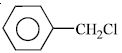
Which will give white ppt. with $AgNO_3$ ?
  • A

  • B

  • C

  • Both $A\, \& \,C$

Answer

Correct option: D.
Both $A\, \& \,C$
d
As both $A$ and $C$ provide chloride ion, due to formation of stable carbocation (allylic and benzylic), they both give white ppt. of $AgCl$ with silver nitrate.

Need a full question paper?

Generate a complete, print-ready paper with questions like this in minutes — across 16+ boards, with answer keys.

Start Generating Free

Similar questions

The $pH$ value of the solution in which a particular amino acid does not migrate under the influence of an electric field in called the
The disproportionation of $MnO _{4}^{2-}$ in acidic medium resulted in the formation of two manganese compounds $A$ and $B$. If the oxidation state of $Mn$ in $B$ is smaller than that of $A$, then the spin-only magnetic moment $(\mu)$ value of $B$ in $BM$ is $.........$ (Nearest integer)
Benzene $\xrightarrow[{Anhy.AlC{l_3}}]{{C{H_3}Cl}}A\,\xrightarrow[{hv}]{{C{l_2}(1\,\,mole)}}B\xrightarrow{{AgCN}}C$

Which is correct for above reaction

Carbinol is
Number of moles of oxygen that one mole of benzoic acid uses in the production of phenol by oxidative decarboxylation?
Which of the followig compounds had highest Ka Value?
Choose the correct option regarding the following complex compounds which follows $(F)$ and does not follow $(NF)$ the sidgwick $EAN$ rule

$(I)$  $\left[ {{{\left( {P{h_3}P} \right)}_2}PdC{l_2}PdC{l_2}} \right]$

$(II)$  $\left[ {NiBrCl\left( {en} \right)} \right]$

$(III)$  $N{a_4}\left[ {Fe{{\left( {CN} \right)}_5}NOS} \right]$

$(IV)$  $Cr{(CO)_3}{\left( {NO} \right)_2}$

$(I)$   -   $(II)$   -   $(III)$   -   $(IV)$

Which complex is most stable ?

Where $k_d\, =$ Dissociation constant

An electrolytic cell contains solution of $Ag_2SO_4$ and has Platinum electrodes. A current is passed until $1.6\,g$ of $O_2$ is liberated at anode. The amount of silver deposited at cathode would be ............ $\mathrm{g}$
If $‘a’$ is the initial concentration of the reactant, the half-life period of the reaction of $n^{t h}$ order in inversely proportional to