MCQ
Which would exhibit ionisation isomerism
- A$\left[ {Cr{{\left( {N{H_3}} \right)}_6}} \right]C{l_3}$
- ✓$\left[ {Co{{\left( {N{H_3}} \right)}_5}Br} \right]S{O_4}$
- C$\left[ {Cr{{(en)}_2}C{l_2}} \right]$
- D$\left[ {Cr{{(en)}_3}C{l_3}} \right]$
$[Co{(N{H_3})_5}Br]S{O_4}$$ \rightleftharpoons $ ${[Co{(N{H_3})_5}Br]^{2 + }} + SO_4^{2 - }$
$[Co{(N{H_3})_5}S{O_4}]Br$$ \rightleftharpoons $ ${[Co(N{H_3})S{O_4}]^ + } + B{r^ - }$.
Generate a complete, print-ready paper with questions like this in minutes — across 16+ boards, with answer keys.
$\mathop {\begin{array}{*{20}{c}}
O \\
{||} \\
{Ph - C - Ph}
\end{array}}\limits_{(I)} $ $\mathop {\begin{array}{*{20}{c}}
{\,\,\,\,\,\,O} \\
{\,\,\,\,\,||} \\
{C{H_3} - C - H}
\end{array}}\limits_{(II)} $ $\mathop {\begin{array}{*{20}{c}}
{\,O} \\
{||} \\
{C{H_3} - C - C{H_3}}
\end{array}}\limits_{(III)} $

Reason : Oxygen forms $p\pi \,-\, p\pi $ multiple bond due to small size and small bond length but $p\pi \,-\,p\pi $ bonding is not possible in sulphur.
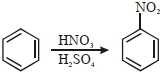
In the above reaction, $3.9\, g$ of benzene on nitration gives $4.92\, g$ of nitrobenzene. The percentage yield of nitrobenzene in the above reaction is............. $\%$. (Round off to the Nearest Integer).
(Given atomic mass: $C : 12.0\, u , H : 1.0\, u$$O : 16.0\, u , N : 14.0\, u )$