Question

While tuning in a certain broadcast station with a receiver, we are actually

(a) Varying the local oscillator frequency

(b) Varying the frequency of the radio signal to be picked up

(c) Tuning the antenna

(d) None of these

Answer

(a) Varying the local oscillator frequency

Need a full question paper?

Generate a complete, print-ready paper with questions like this in minutes — across 16+ boards, with answer keys.

Start Generating Free

Similar questions

Four equal capacitors, each of capacity C, are arranged as shown. The effective capacitance between A and B is

(a)  

(b)  

(c)  

(d)  C

The inverse square law of intensity $\Big(\text{i.e., the intensity}\propto\frac{1}{\text{r}^2}\Big)$ is valid for a:

The spectral series of the hydrogen spectrum that lies in the ultraviolet region is the

(a) Balmer series

(b) Pfund series

(c) Paschen series

(d) Lyman series

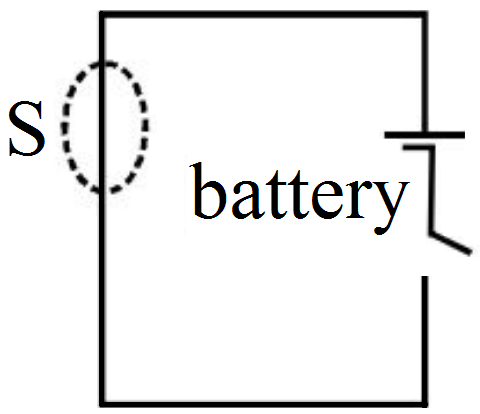
A closed surface S is constructed around a conducting wire connected to a battery and a switch (figure). As the switch is closed, the free electrons in the wire start moving along the wire. In any time interval, the number of electrons entering the closed surface S is equal to the number of electrons leaving it. On closing the switch, the flux of the electric field through the closed surface:

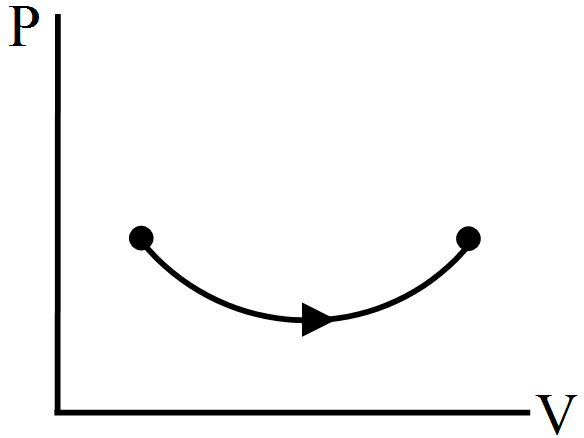
Consider the process on a system shown in figure. During the process, the work done by the system:
  1. Continuously increases.
  2. Continuously decreases.
  3. First increases then decreases.
  4. First decreases then increases.

If scattering particles are 56 for 90°  angle then this will be at 60°  angle

(a) 224

(b) 256

(c) 98       

(d) 108

The molecules having permanent electric dipole moment even in the absence of electric field are called as:

Given a point source of light, which of the following can produce a parallel beam of light

(a) Convex mirror

(b) Concave mirror

(c) Concave lens

(d) Two plane mirrors inclined at an angle of 90°

The primary origin (s) of magnetism lies in:

If 2.2 kilowatt power is transmitted through a 10 ohm line at 22000 volt, the power loss in the form of heat will be

(a) 0.1 watt

(b) 1 watt

(c) 10 watt

(d) 100 watt