Question
Who administered the small towns and how?

Answer

The small towns were generally managed by a Samanta or a Zamindar. They built a fortified palace in or near the towns.
  • They levied taxes on traders, artisans and sometimes donated the right to collect revenue to the local temples.
  • These temples were built by these rich merchants themselves. These 'rights' were recorded in inscriptions.

Need a full question paper?

Generate a complete, print-ready paper with questions like this in minutes — across 16+ boards, with answer keys.

Start Generating Free

Similar questions

Ocean water is salty.
Why there is scanty vegetation in the deserts?
Where are the volcanoes found?
Who ruled the Maratha kingdom after the death of Shivaji?
Do you know any other old markets from your state? How could it be similar or different from today’s markets? Discuss with elders in the family and community.
Read the following extract and answer the question as follows. 
In search of the True Lord
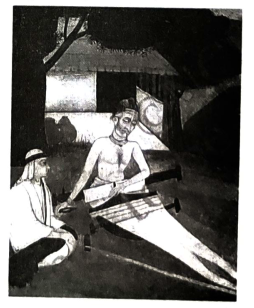
Here is a composition of Kabir:
O Allah-Ram present in all living beings
Have mercy on your servants, O Lord!
Why bump your head on the ground,
Why bathe your body in water?
Image
You kill and you call yourself "humble"
But your vices you conceal.
Twenty-four times the Brahmana keeps the ekadasi fast
While the Qazi observes the Ramzan
Tell me why does he set aside the eleven months
To seek spiritual fruit in the twelfth?
Hari dwells in the East, they say
And Allah resides in the West,
Search for him in your heart, in the heart of your heart;
There he dwells, Rahim-Ram.
In what ways are the ideas in this poem similar to or different from those of Basavanna and Jalaluddin Rumi?
Explain different types of life support provided by the environment..
News of India Report
Crackdown on Polluting Factories
Protestors Block Roads and Disrupt Traffic
Violent protests by owners and workers brought the city to a standstill today. People getting to work could not do so on time because of huge traffic jams. The owners and workers are protesting the government's decision to close down polluting factory units.
Although, the government did take this decision rather hastily, the protestors have known for quite some time that their units are not legal. Moreover, the levels of pollution in the city will be greatly reduced by this closure. Mr Jain a well known figure in the city said, "With our city gradually becoming India's new business hub, it is important that it be a clean and green city. Polluting factories should be moved. The factory owners and workers should accept the relocation being offered by the government instead of protesting".
India Daily Report
Closure of factories causes unrest
The closure of one lakh factories in the city's residential areas is likely to become a serious issue. On Monday, thousands of factory owners and workers took to the streets to strongly protest this closure. They said that their livelihoods would be lost. They say that the fault lies with the municipal corporation because it continued to issue licenses for new factories to be set up in residential areas.
They also say that there were no adequate relocation efforts. The owners and workers plan a one-day city bandh to protest against this closure. Mr Sharma, one of the factory owners said, "The government says that it has done a lot to relocate us.
But the areas they have sent us to have no facilities and have not been developed for the last-five years."
(i) Are the above stories in the two newspapers similar? And if not, why not? What in your view, are the similarities and the differences?
(ii) If you read the story in the News of India, what would you think about the issue?
Many Rajputs, particularly those belonging to Amber and Jodhpur, had served under the Mughals with distinction.
(i) Who held the governorship of Malwa and Gujarat?
(ii) Why Rajput kings served under the Mughals?
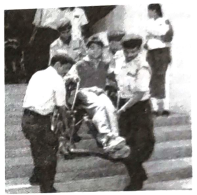
According to the Rights of Persons with Disabilities Act, 2016, persons with disabilities have equal rights, and that the government should make possible their full participation in society. The government has to provide free education and integrate children with disabilities into mainstream schools. This law also states that all public places Including buildings, schools, etc., should be accessible and provided with ramps.
Look at the photograph and think about the boy who is being carried down the stairs. Do you think the above law is being implemented in his case? What needs to be done to make the building more accessible for him? How would his being carried down the stairs affect his dignity as well as his safety?
Image