MCQ
Who first proposed that light was wave$-$like in character?
  • Huygens
  • B
    Newton
  • C
    Young
  • D
    Maxwell

Answer

Correct option: A.
Huygens

In $1678,$ Dutch physcist, christian Huygens beived that light was made up of waves vibrating up and down perpendicular to the direction of the light travels, and therefore formulated a way of visualising wave propagation. This became known as Huygens Principe.

Need a full question paper?

Generate a complete, print-ready paper with questions like this in minutes — across 16+ boards, with answer keys.
Start Generating Free

Similar questions

When a test charge is brought from infinity to near the dipole along the neutral line of an electric dipole, then the work done will be:
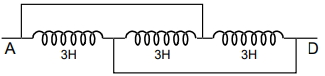
The inductance between $A$ and $D$ is
The resistances of the four arms $P, Q, R$ and $S$ in a Wheatstone's bridge are $10\,ohm$, $30\,ohm$, $30\,ohm$ and $90\,ohm$, respectively. The e.m.f. and internal resistance of the cell are $7\,volt$ and $5\,ohm$ respectively. If the galvanometer resistance is $50\,ohm$, the current drawn from the cell will be ............... $A$
The total intensity of earth's magnetic field at the magnetic equator is $5$ $units$. Its value at a magnetic latitude of $37^o $ is equal to 
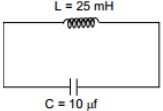
If maximum energy is stored in capacitor at $t =0$ then find the time after which current in the circuit will be maximum.
A long straight wire along the $z-$ axis carries a current $I$ in the negative $z$ direction. The magnetic field vector $\vec B$ at a point having coordinates $(x, y)$ in the $z = 0$ plane is
Which of the following element was discovered by study of Fraunhofer lines
The wavelength of yellow line of sodium is $5896 \mathring A$ . Its wave number will be
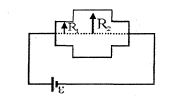
A cylindrical resistance is connected across battery $\varepsilon $ . Cylinder has uniform free electron density, mid part of cylinder has larger radius as shown in figure. Then $V_d$  (drift velocity) $V/S$ (distance across the length of the resistance)
A parallel combination of two capacitors of capacitance $C_1$ and $C_2$ is given a charge $Q$. If there is $Q_1$ charge on $C_1$ and $Q_2$ charge on $C_2$, the ratio of $\frac{Q_1}{Q_2}$ will be: