Question
Why are certain compounds called hydrocarbons? Write the general formula for homologous series of alkanes, alkenes and alkynes and also draw the structure of the first member of each series. Write the name of the reaction that converts alkenes into alkanes and also write a chemical equation to show the necessary conditions for the reaction to occur.
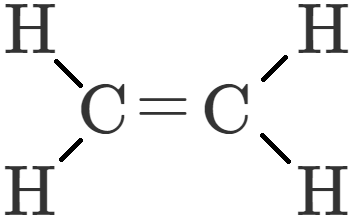
Need a full question paper?

Generate a complete, print-ready paper with questions like this in minutes — across 16+ boards, with answer keys.

Start Generating Free

Similar questions

Give the steps involved in the extraction of metals of low and medium reactivity from their respective sulphide ores.
Consider the following organic compounds:
CH3OH, C2H5OH, CH3COCH3, CH3COOH, C2H5COOH, C4H9COOC2H5, CH4, C2H6, CH3CHO, HCHO
Out of these compounds:
  1. Which compound is most likely to be sweet-smelling?
  2. Which compound on treatment with conc. H2SO4 at 170°C forms an alkene?
  3. Which compound on repeated chlorination forms chloroform?
  4. Which compound is added to alcohol to denature it?
  5. Which compound is a constituent of vinegar?
  6. Which compound is used to sterilise wounds and syringes?
Soaps and detergents are both types of salts. State the difference between the two. Write the mechanism of the cleansing action of soaps. Why do soaps not form lather (foam) with hard water? Mention any two problems that arise due to the use of detergents instead of soaps.
  1. What is a homologous series of compounds? List any two characteristics of a homologous series.
  2.  
  1. What would be observed on adding a 5% solution of alkaline potassium permanganate solution drop by drop to some warm ethanol taken in a test tube?
  2. Write the name of the compound formed during the chemical reaction.
  1. How would you distinguish experimentally between an alcohol and a carboxylic acid on the basis of a chemical property?
Explain the following.
  1. Reactivity of Al decreases if it is dipped in HNO3.
  2. Carbon cannot reduce the oxides of Na or Mg.
  3. NaCl is not a conductor of electricity in solid state whereas it does conduct electricity in aqueous solution as well as in molten state.
  4. Iron articles are galvanised.
  5. Metals like Na, K, Ca and Mg are never found in their free state in nature.
Two organic compounds A and B have the same molecular formula C6H12. Write the names and structural formulae:
  1. If A is a cyclic compound.
  2. If B is an open chain compound.
  3. Which compound contains single bonds as well as a double bond?
  4. Which compound contains only single bonds?
An element X which is a yellow solid at room temperature shows catenation and allotropy. X forms two oxides which are also formed during the thermal decomposition of ferrous sulphate crystals and are the major air pollutants.
  1. Identify the element X.
  2. Write the electronic configuration of X.
  3. Write the balanced chemical equation for the thermal decomposition of ferrous sulphate crystals?
  4. What would be the nature (acidic/ basic) of oxides formed?
  5. Locate the position of the element in the Modern Periodic Table.
  1. Why does carbon form compounds mainly by covalent bonding?
  2. List any two reasons for carbon forming a very large number of compounds.
  3. An organic acid ‘X’ is a liquid which often freezes during winter time in cold countries, has the molecular formula, C2H4OOn warming it with ethanol in the presence of a few drops of concentrated sulphuric acid, a compound ‘Y’ with a sweet smell is formed.
  1. Identify ‘X’ and ‘Y’.
  2. Write a chemical equation for the reaction involved.
The metal M reacts vigorously with water to form a solution S and a gas G. The solution S turns red litmus to blue whereas gas G, which is lighter than air, burns with a pop sound. Metal M has a low melting point and it is used as a coolant in nuclear reactors.
  1. What is metal M?
  2. What is solution S? Is it acidic or alkaline?
  3. What is gas G?
  4. Write a balanced chemical equation for the reaction which takes place when metal M reacts with water.
  5. Is this reaction exothermic or endothermic?