Question
Why are sedimentary cycles slower than gaseous cycles? Explain giving resons.

Answer

Gaseous Cycle:-

In this reservoir is the atmosphere and nutrient occurs in either gaseous or vapour form. These cycles are comparatively faster than others, e.g carbon cycle and nitrogen cycle.

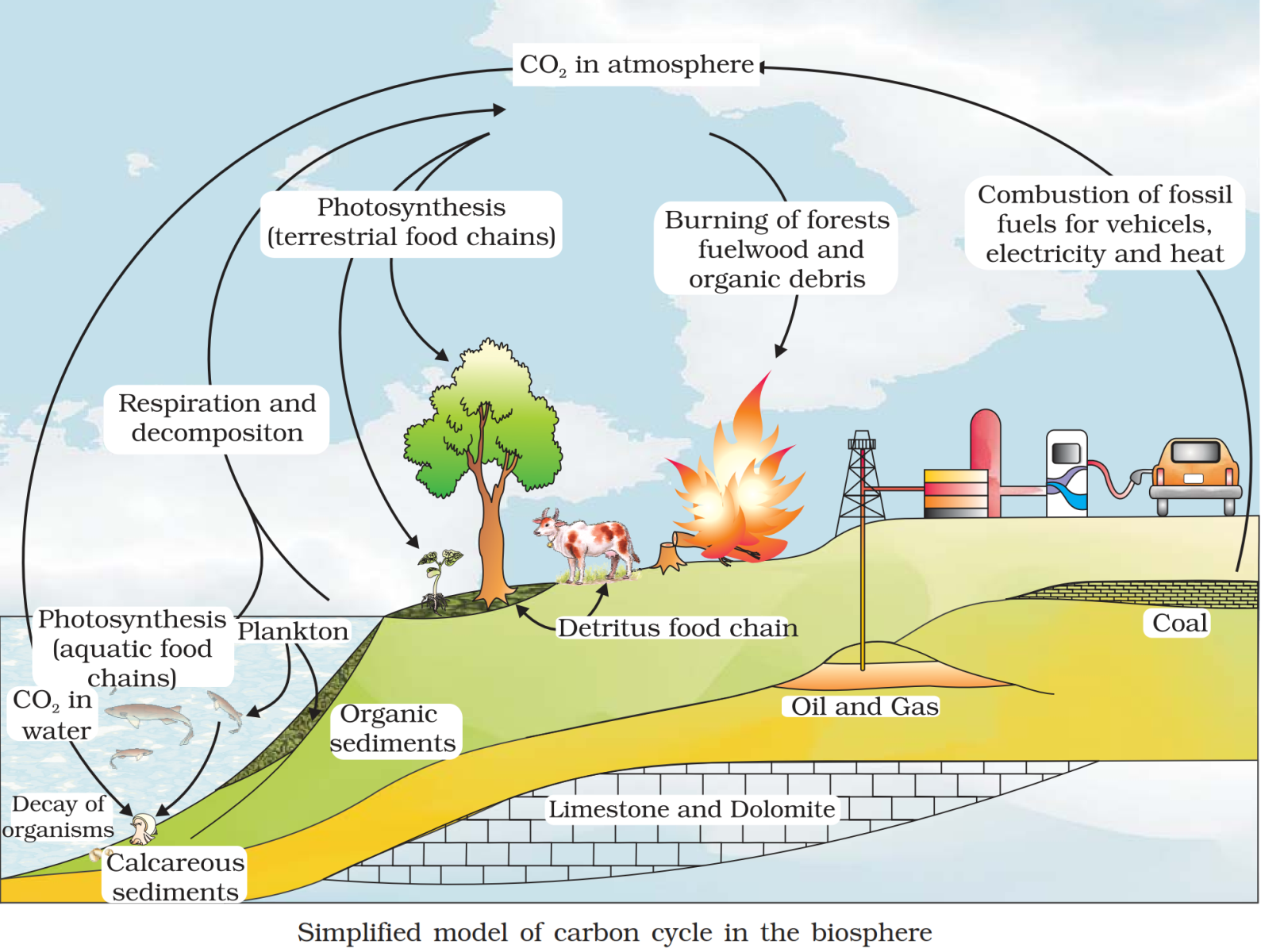
Carbon cycle: Carbon constitutes 49% of dry weight of organisms and it is next only to water. About 71% carbon is found dissolved in oceans. This oceanic reservoir regulates the amount of carbon dioxide in the atmosphere. The fossil fuels also represent a reservoir of carbon. Therefore, carbon cycling occurs through atmosphere, ocean and through living and dead organisms. Approximately, 4 × 10kg of carbon is fixed in the biosphere through photosynthesis annually.

Carbon fixation or carbon assimilation: refers to the conversion process of inorganic carbon (carbon dioxide) into organic compound. Carbon dioxide is returned to the atmosphere via respiratory activities of producers and consumers. Decomposers also contribute substantially to CO2 pool by their processing of waste materials and dead organic matter of land or oceans.
Sedimentary Cycle:-

In this reservoir is the earth's crust. Nutrient occurs in non-gaseous form. These cycles are comparatively slower than gaseous cycles, e.g. phosphorus cycle and sulphur cycle.

Phosphorus Cycle: Phosphorus is a major constituent of biological membranes, nucleic acids and cellular energy transfer systems. Animal shells, bones and teeth all are made up of phosphorus only.
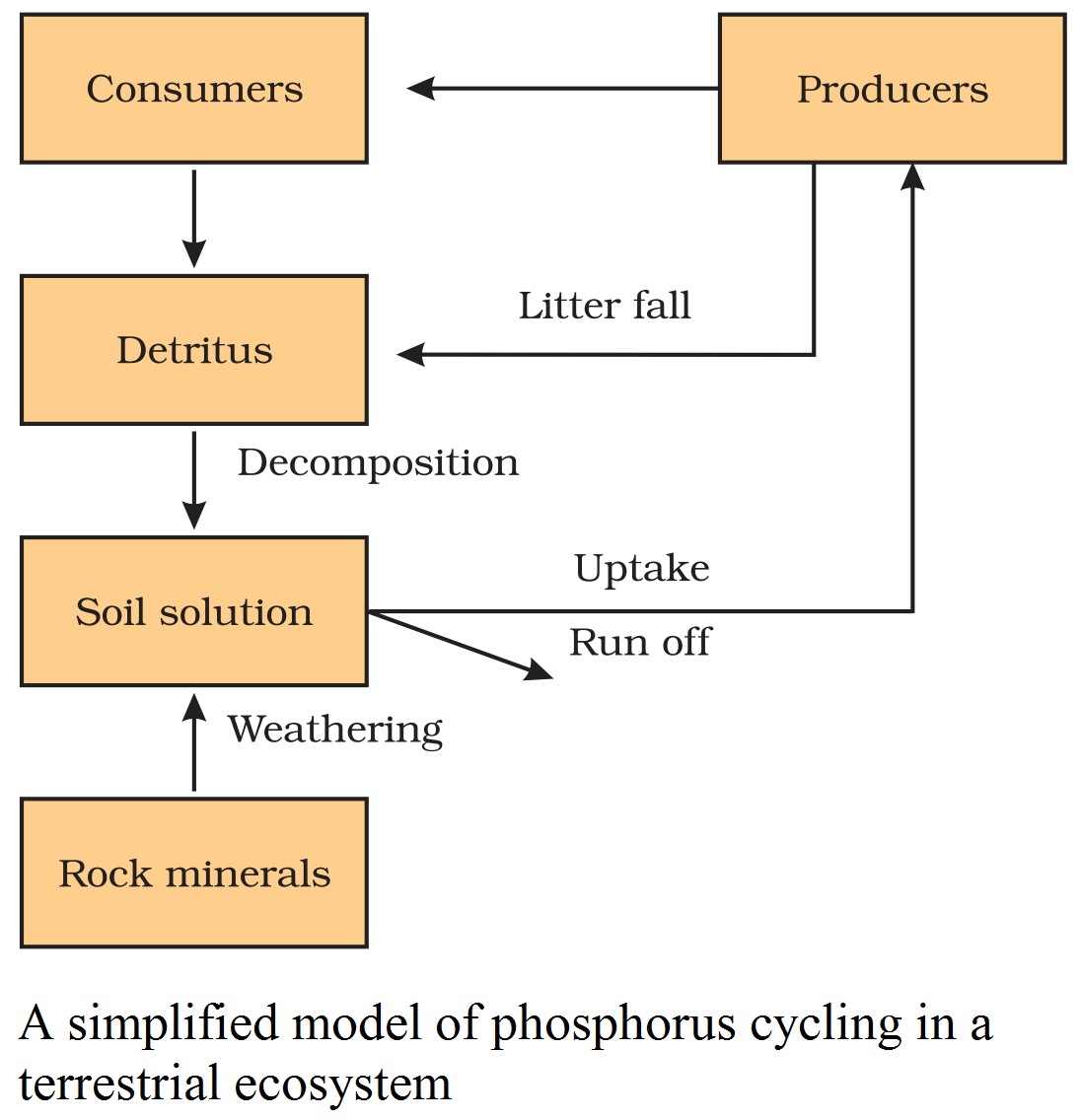
The natural reservoir of phosphorus is rock, which contains phosphorus in the form of phosphates. When rocks are weathered, minute amounts of these phosphates dissolve in soil solution and are absorbed by the plant roots and finally animals and herbivores obtain phosphorus from those plants. The waste products and the dead organisms are decomposed by phosphate-solubilising bacteria releasing phosphorus.

Need a full question paper?

Generate a complete, print-ready paper with questions like this in minutes — across 16+ boards, with answer keys.

Start Generating Free

Similar questions

The following is the illustration of the sequence of ovarian events (a – i) in a human female.

Identify the figure that illustrates corpus luteum and name the pituitary hormone that influences its formation.

What do you mean by transcription? Explain the transcription process with a well labelled
diagram.###What is transcription? Explain the transcription process in bacteria by making a labelled diagram.###Explain the transcription process in bacteria and make a diagram.
Write the name of causative agent and symptoms of following sexually transmitted diseases.
1. Syphilis, 2. Gonorrhea, 3. Herpes Genitalis, 4. Trichomoniasis, 5. Chalmydiasis, 6. AIDS, 7. Genital Warts, 8. Vaginitis.
What is vaccination? Explain in detail mother and child vaccination.
Use this key for Questions A-D Key:
  1. thymus gland.
  2. spleen.
  3. lymph node.
  4. red bone marrow.
  1. Causes differentiation of T-cells.
  2. Purifies lymph.
  3. Contains red pulp and white pulp.
  4. Formation of granular and a granular leukocytes.
A species-area curve is drawn by plotting the number of species against the area. How is it that when a very large area is considered the slope is steeper than that for smaller areas?
What are hallucinogens? Give two examples. Mention their clinical use, if
any.
  1. Explain the role of regulatory gene, operator, promoter and structural genes in lac operon when E.coli is growing in a culture medium with the source of energy as lactose.
  2. Mention what would happen if lactose is withdrawn from the culture medium.
How do ecologists estimate the total number of species present in the world?
State and explain with the help of a cross, the law of segregation as proposed by Mendel.