Question
Why are some molecules called bioactive molecules? Give two examples of such molecules.

Answer

Some molecules are called bioactive molecules, because microbes like bacteria or fungi are used in their production.
Example:
  • Citric acid: Acetic acid
  • Butyric acid: Lactic acid
  • Ethanol: Lipase
  • Streptokinase: Cyclosporin A

Need a full question paper?

Generate a complete, print-ready paper with questions like this in minutes — across 16+ boards, with answer keys.
Start Generating Free

Similar questions

During an excavation assignment, scientists collected pollen grains of a plant preserved in deeper layers of soil. Analyse the properties of pollen grains which help in the fossilization.
Name the two special types of lymphocytes in humans. How do they differ in their roles in immune response?
Explain the process of charging of tRNA. Why is it essential in translation?
Explain any two devices by which autogamy is prevented in flowering plants.
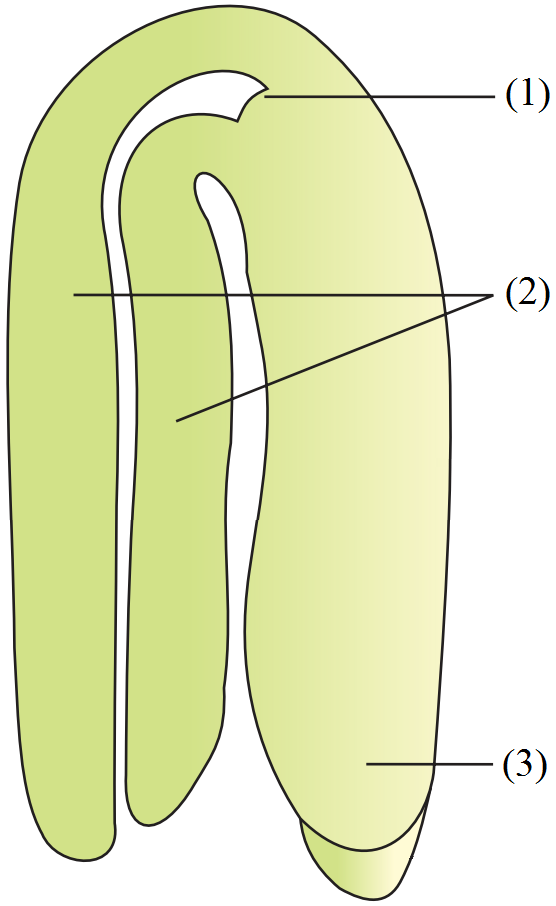
the given figure of a typical dicot embryo, label the parts $(1), (2)$ and $(3).$ State the function of each of the labelled part.
How are morphine and heroin related? Mention the effect each one of them has on the human body?
How is ‘Rosie’ considered different from a normal cow? Explain.
During a monohybrid cross involving a tall pea plant with a dwarf pea plant, the offspring populations were tall and dwarf in equal ratio. Work out a cross to show how it is possible.
Why are papaya and date palm plants said to be dioecious whereas cucurbits and coconut palms monoecious, in spite of all of them bearing unisexual flowers?
Put these statements in the proper order, by rearranging the letters, to describe Darwin's theory of natural selection-
  1. The end result of organic evolution is many different species, each adapted to specific environments.
  2. Many more individuals are produced each generation that can survive and reproduce.
  3. Gradually, over long periods of time, a population can become well adapted to a particular environment.
  4. There are inheritable variation among the members of a population.
  5. Individuals with adaptive characteristics are more likely to be selected to reproduce by the environment.